Search Luxury Life Kenya

Generic selectors
Exact matches only
Search in title
Search in content
Post Type Selectors


Chef Khalid Alibhai adds the final touches—where precision meets passion.
WRITTEN BY NJERI MUTHARI
PHOTOGRAPHY BY ASHTON ALLERT

FLAVOUR, SUSTAINABILITY & COMMUNITY: ARIEL MOSCARDI’S RECIPE FOR SUCCESS AT CULTIVA

After the scenic drive through Karen’s quiet roads lined with tall trees, you suddenly find yourself on a muddy, unpaved road. There’s no restaurant in sight—nothing, by the looks of it, you could assume you’re definitely lost, but this is all part of the carefully orchestrated crescendo of emotions by one of Kenya’s most celebrated culinary destinations—Cultiva.

The story of this revolutionary dining experience begins with Ariel Moscardi, an Ecuadorian chef whose journey has created one of Nairobi’s most innovative and sustainable culinary experiences. One December morning, in the middle of the Kenyan summer, we sat down with Ariel, founder of Cultiva Farms in Kenya and Ecuador.

The Origins. Ariel Moscardi grew up in Quito, Ecuador, where his mother’s work as an agronomist profoundly influenced his understanding of food and farming. “I grew up around a lot of agriculture and different ethnic communities,” he shares.

These would all eventually come to influence his culinary art as he discovered himself and his passions.

Ariel’s culinary journey began in his hometown where he worked as a waiter in a restaurant at the age of 16. He watched and tasted the different cuisines the chefs made. Being a part of this creative process inspired him to want to do the same. “I always loved to eat,” he said with a laugh, “so I decided, if I’m going to be a cook, I want to study in a place that represents culinary excellence. I chose Le Cordon Bleu Academy in Mexico City.”

Ariel’s career took off when he joined a Basque-French restaurant as a cook while still in Mexico; an experience that he holds fondly. He later moved on to work with a major hotel chain before joining a franchise by the renowned Peruvian chef Gastón Acurio. Starting as a ceviche maker, Ariel’s dedication and skills saw him rise to the role of managing the first franchise in Mexico.

During one of Gastón’s visits, Ariel had the opportunity to meet him, a meeting that led to offering Ariel a position in Peru. 

The move immersed Ariel into Peruvian culture and cuisine, where he discovered the country’s rich agricultural traditions, coastal influences, and culinary techniques shaped by Japanese, Chinese, African, and Italian cultures.  This diverse culinary experience complemented his formal French training and greatly expanded his gastronomic knowledge.

The job moved Ariel around a lot and after two years in Costa Rica, he moved back to Ecuador. While he was back home and had time to decompress from all the travel, culture and hustle of the kitchens, he knew that his next venture would be in entrepreneurship.

Ariel partnered with a close friend, the two opened a catering business in a small winery that Ariel’s aunt lent them. Ariel took care of the culinary side of things while his friend took care of client management. The duo was unstoppable, the business grew seeing them catering for events of more than 200 people. The business’s success affirmed Ariel’s decision to pave his own path.

“I wanted the catering to stand out—to feel fresher, more vibrant, and colourful. Instead of the usual buffets, which I’ve never enjoyed cooking, we served individually plated dishes. However, serving hundreds of plates in advance often compromised the freshness. This challenge led me to think creatively, inspired by my upbringing with my mother in an agricultural environment. I started exploring ways to grow unique produce that only we could offer.

We began cultivating microgreens and edible flowers, initially inspired by Mexican culinary traditions but adapted for Ecuador. At the time, no one in Ecuador was doing anything similar, especially not for catering. This gave our dishes a distinctive, fresh, and nutritious appeal. We even used seeds from my grandmother’s farm, experimenting with local varieties to create something truly unique.

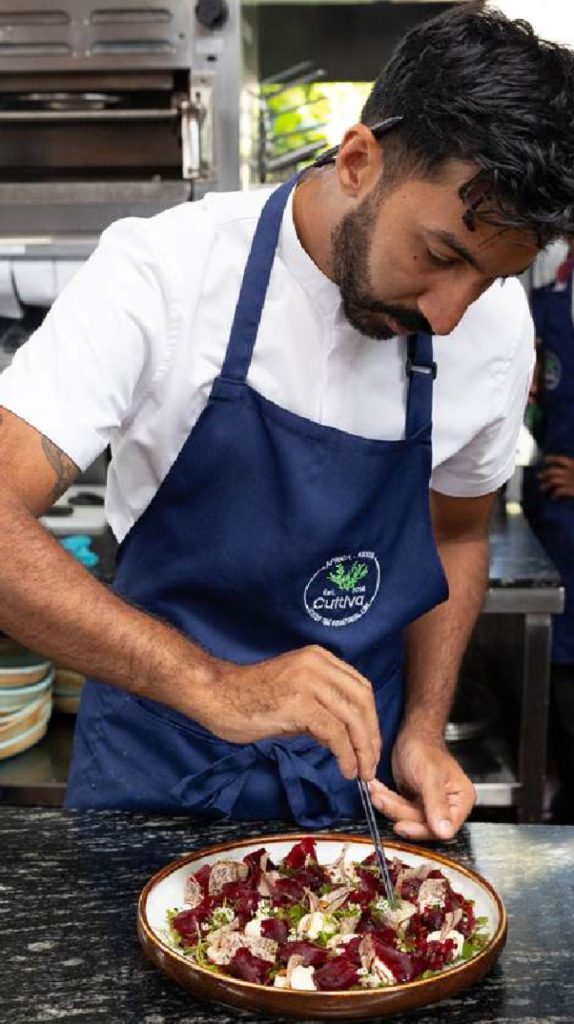
“Experimenting to create something truly unique with local produce.”

As word spread, our catering gained fame. Eventually, my partner and I realised this could be a business opportunity. We rented a larger piece of land, built more greenhouses, and expanded into farming, which complemented the catering business. And so, in 2014 Cultiva was born in Quito, Ecuador.”

As time went by the catering business expanded into a 16-hectare farm. “It’s a big company now, with a client base across Ecuador,” he says. During this time, he also worked as a private chef on Galapagos boats. “The Galapagos Islands are home to many endemic species,” Ariel explains. This meant he had to fly fresh produce from Quito to the islands to create his dishes. These experiences deepened his connection to sustainability and food production.

Move to Kenya. In 2017, Ariel met Peter Silvester, a second-generation Kenyan and owner of Royal African Safaris, during one of his private chef engagements on a Galapagos boat. “Peter was fascinated by how I did things, from the technique to the fresh produce from Quito,” Ariel shares. Their friendship grew, and Peter invited Ariel to Kenya to explore opportunities for collaboration. “I was supposed to only come for a month… but I ended up staying for three,” Ariel says. “During this time, Cultiva in Nairobi began to take shape.” Leaving the business in Quito to his partner, Ariel moved to Nairobi.

Cultiva in Kenya. Cultiva began as a pop-up restaurant in 2019, with Ariel transforming a small acre of land into a thriving farm and open kitchen. “We started by posting on Instagram about dim sum pop-ups, and immediately, we were booked,” he recalls. By mid-2019, Cultiva had evolved into a full-fledged restaurant, initially opening four days a week before expanding to six days.

When the pandemic hit in 2020, Ariel’s innovative spirit kept the business afloat. They launched The Weekly Club, a subscription service delivering farm-fresh products and meals across Nairobi. “We were doing 80 to 100 deliveries a day,” he shares. This initiative not only sustained the restaurant but also deepened Cultiva’s connection with its community.

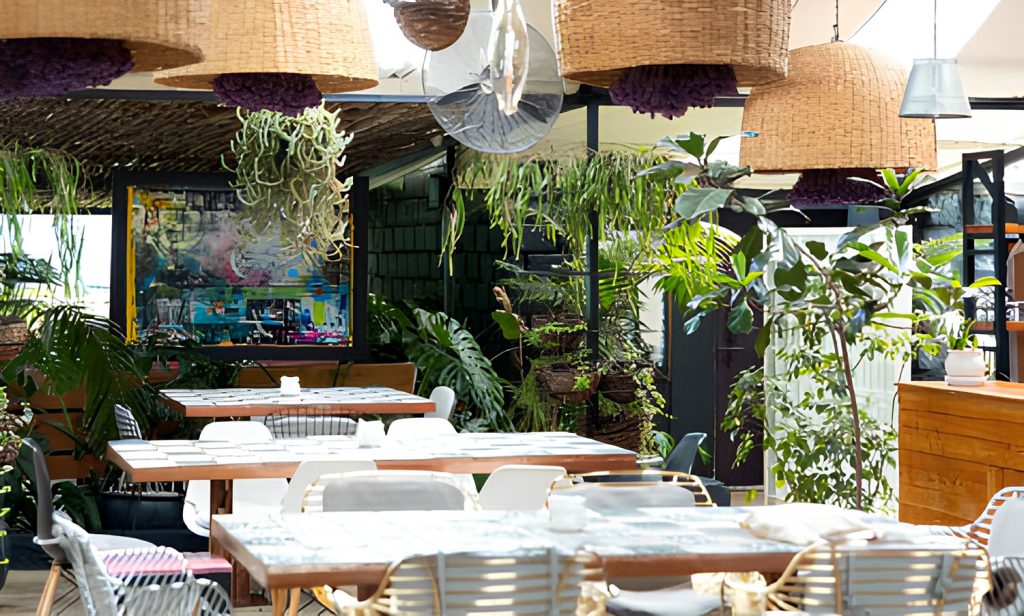
Designing an Experience. “I designed every aspect of Cultiva myself,” he says. From the open plan kitchen to the layout of the on-site farm– every detail. “I didn’t want walls,” he explains. “As a chef, I want to see everything, and I want my guests to feel like they are part of it all. You’ll see people walking through the tables carrying sacks of flour—it’s all part of the artistic vision.”

Cultiva’s design philosophy is rooted in community. Ariel emphasizes that Cultiva isn’t just about him—it’s a team effort. “Everything we do at Cultiva is built by the people working here,” he says.

“We are a collective.  From the kitchen to the farm, everyone has a role to play, and their contributions shape what we create.”

“When people come here, it’s not just about the food; it’s about feeling part of something bigger, something meaningful.” This approach includes supporting local producers, mentoring diverse talent, and creating opportunities for growth. “Our strength lies in our community, both inside and outside the restaurant,” Ariel says.

Sustainability at the Core. “If the carrots are small, we’ll still use them,” he explains. “We create dishes around what the farmers can provide.” Sustainability isn’t just a practice—it’s a responsibility. Ariel works closely with producers, adapting a daily menu based on what’s available.

The farm produces all of Cultiva’s fresh produce ensuring that each of the dishes served is a fresh culinary masterpiece.

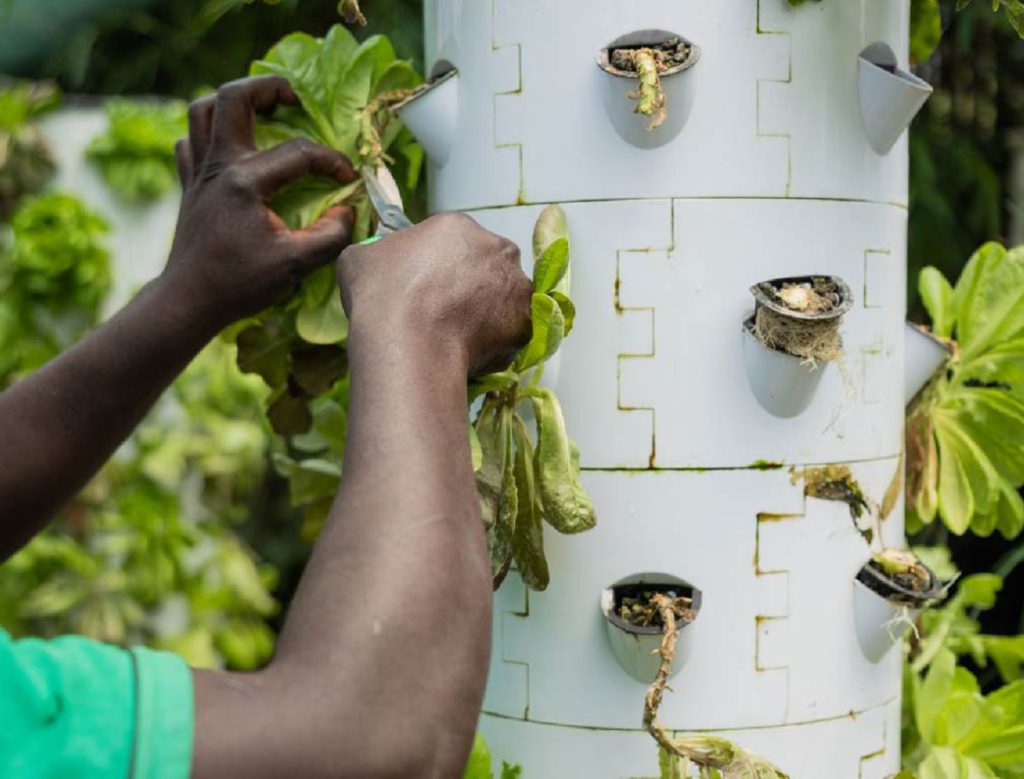
On top of using traditional methods of farming, the farm has also become a hub of innovation and new technology. “We’re working on hydroponic tomatoes and lettuce,” Ariel shares. The farm has become a research and development hub working on new ways to grow high-quality produce. Cultiva works with other satellite organic farms that feed into the restaurant ensuring the standard is maintained. As the restaurant expands and engages more with the community, Ariel continues to emphasise the value of using the land resource effectively.

A Legacy Beyond Food. For Ariel, Cultiva is about more than just food. “My biggest goal is to transcend,” he says. Through education, mentorship, and community building, he hopes to leave a lasting impact. “We’ve created a culture based on values like adaptability, patience, and initiative,” he explains. “It’s about making better human beings, not just better chefs.”

QUICK FIRE QUESTIONS

What’s your favourite part of the job?

The creative side of everything—construction, food, service, experiences. I also love organising. I’m good at logistics, and my impatience makes me efficient. 

Your idea of happiness—what would it be?

I believe happiness is found in everyday moments. For me, happiness is having the freedom and space to do what I love. It’s not about achieving a specific goal; it’s about creating a life that allows me to spend time on the things and people I value. 

If you could bring an ingredient or dish from Ecuador, what would it be?

A dish I’d love to bring is pachamanca. It’s part of our summer solstice tradition, where you dig a hole, layer food inside the hole, including potatoes, maize and more like a pyramid then cover it and head to the fields to harvest. By the time you come back and uncover the hole, it’s a warm feast for hundreds of people. It’s an incredible celebration of the harvest and community. I’d love to bring that here. 

What is the heart of Cultiva’s story?

Cultiva isn’t an industry; it’s like a market in Mexico where everyone has their role. Cultiva means “cultivate” in Spanish, and we chose this name because we wanted to cultivate awareness, health, community, and connection. It’s not about cultivating or growing plants; it’s about so much more. Together, we are a collective energy that brings culture to life. 


MUST READ