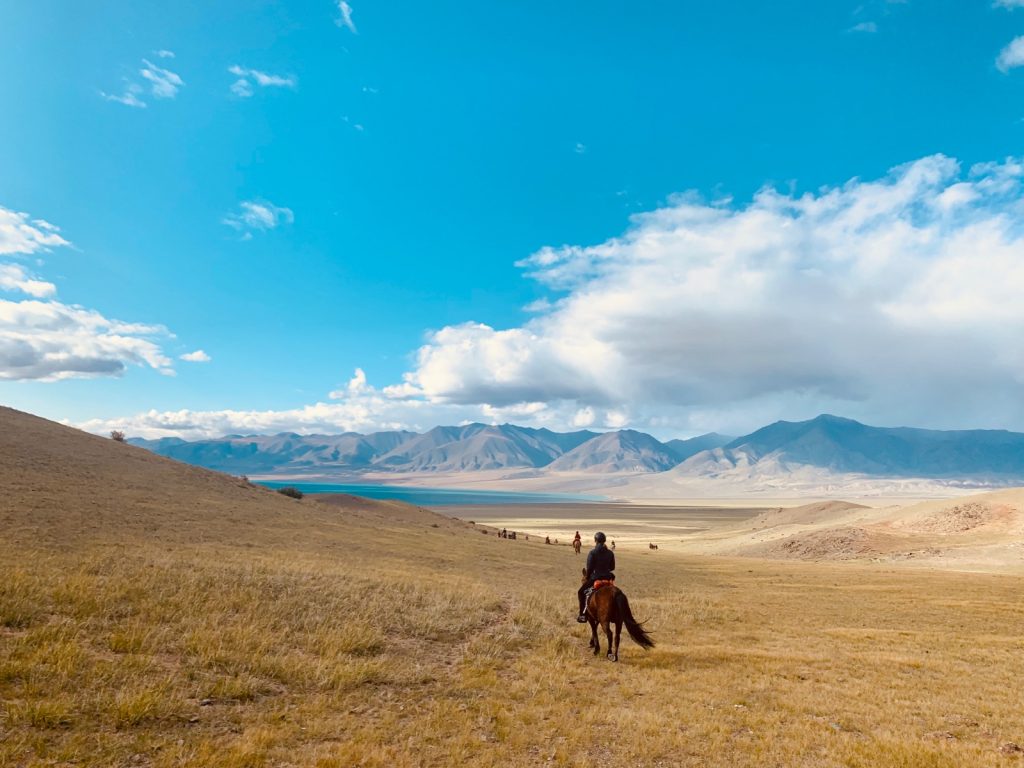
Travelling alongside nature and our animal companions offers a remarkable source of wisdom. We experience exploration guided by animal behaviour, the rhythms of the natural world and nomadic principles. The ability to adapt and offer our nervous system new experiences, in ways that are sustainable and lasting, requires the full engagement of mind, body and environment.
This is more than a mindset. The mind is only one part of who we are. It can easily overlook the subtle messages held within deeply rooted patterns in our bodies.
To access these patterns, immersing ourselves in wild landscapes, observing animals, exploring our own instinctive rhythms and engaging in embodied experiences, guided by a trained professional, can become a gateway to profound and lasting wellbeing.
In a world that often feels overstimulating, fast-moving, isolating and uncertain, we can lose our natural rhythm.
Sometimes it feels as though our foot is permanently on the accelerator.
At other times, it is as though we are trying to move with the handbrake on.
Often we swing between the two.
The result is frequently the same: disconnection.
Disconnection from ourselves, from others and from the world around us.
We search for solutions. We are offered an endless buffet of possibilities. We question what works. We try one approach before moving on to the next. Trends evolve. Science advances. Our own needs inevitably change, and so curiosity remains essential.
But beneath all of this lies something more fundamental.
A foundation.
A place where our whole system can function as it was designed to.
A pause.
A reset.
A space where we connect with the many shades of life.
We rise with the sun. We eat what nourishes us. We move because our bodies are made to move. We rest when rest is needed. We accelerate when the moment calls for it. We observe.
As we move through natural landscapes, we also travel through the landscapes within ourselves.
Along the way, something begins to shift.
Perhaps we notice greater fluidity.
Perhaps we experience a new sense of organisation within our bodies.
Perhaps we discover an intuitive rhythm that feels entirely natural.
From this place, we begin to explore what it truly feels like to be human.
On a Find Your Wild journey, you might wake to the snorts of horses, the gentle sounds of camels or the rhythm of milk churns as the families we stay with begin their morning routines.
You smell the dust. Feel the earth beneath your feet. Sit quietly as the non-human world awakens around you.
Your body gradually settles into the rhythm of the day.
As we travel, we pause to quench our thirst. Perhaps an animal offers us something to observe, a lesson waiting patiently to be noticed.
We pause again.
We listen to our bodies.
We move.
We rest.
We seek shelter when needed and continue when the time is right.
We intentionally notice how we adapt to unfamiliar landscapes, offering ourselves the opportunity to experience safety within the unknown.
We laugh.
We share.
We sit together in silence.
And when the journey ends, the exploration continues, supporting the gentle integration of these experiences into everyday life.
So here is your invitation.
As you spend time with these words, as you absorb their meaning and their rhythm…
What do you notice?
And what happens next?
Can you embrace it?