Search Luxury Life Kenya

Generic selectors
Exact matches only
Search in title
Search in content
Post Type Selectors


Continuing the Legacy: Mohamed Amin & The Story of Kenya’s Wildlife

 
WRITTEN BY LUXURY LIFE KENYA

In our previous issue, we began a series honouring the extraordinary life and impact of Mohamed Amin — the legendary photo-journalist who showed Africa to the world with honesty, depth and compassion. In this issue, we continue that journey by turning to another side of his work: his powerful documentation of Kenya’s wildlife. Mo did not view wildlife as scenery. Through his lens, elephants, lions, flamingos and rhinos were nations of their own – full of intelligence, vulnerability and grace.

His photographs remind us that the natural world is not separate from our lives, but woven into the identity of this land

Today, Kenya remains one of the world’s most important wildlife sanctuaries – but its survival depends on constant care. From community-run conservancies to pioneering anti-poaching initiatives, conservation here is no longer just protection: it is collaboration, culture and continuity.

As we feature Mo’s images in this issue, we do so not only as a tribute, but as a reminder of responsibility. To see beauty is to care for it. To inherit a legacy is to protect it. □

Discover More
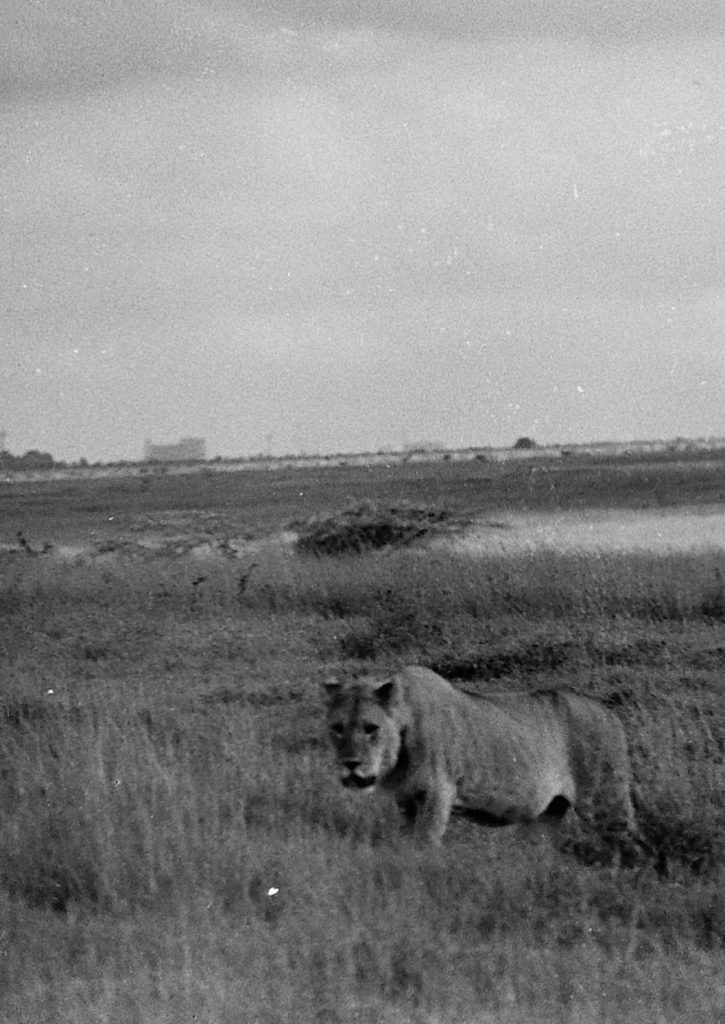
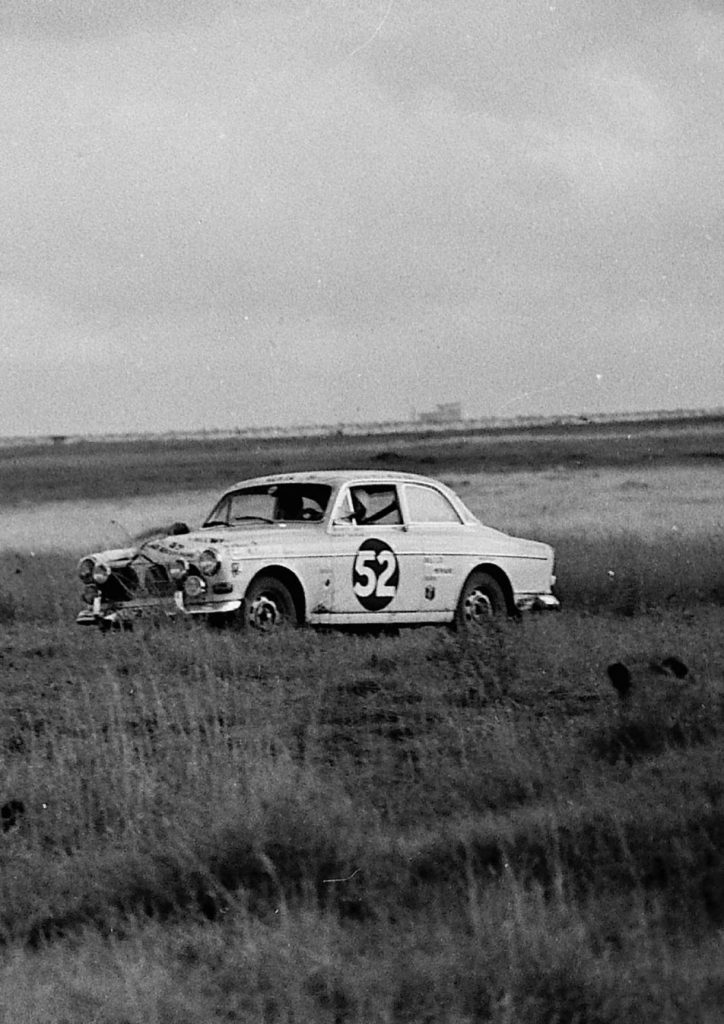
In this photograph 1966 Safari Rally – Car No. 52: Joginder Singh and Bharat Bhardwaj pose with their Volvo 122S during a pre-event photo opportunity at Nairobi National Park. In this striking moment, the rally duo cruises past a lion, a fitting symbol of Kenya’s untamed spirit and the daring nature of the East African Safari Rally. The image captures not just the thrill of motorsport in its golden era, but also the seamless blend of adventure, wildlife, and national pride that defined Kenya’s motoring heritage in the 1960s.
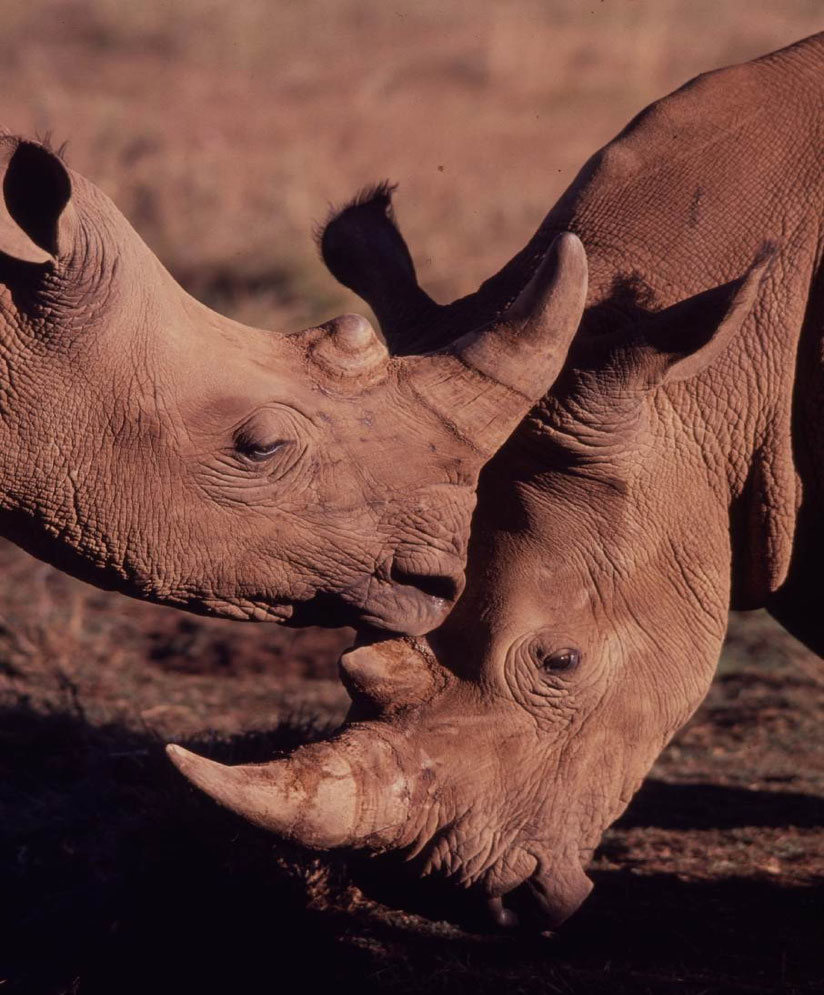
Two White Rhinos: Two white rhinos lock horns in Meru National Park, Kenya. Despite their name, white rhinos aren’t actually white, the name comes from a mistranslation of the Afrikaans word “wyd”, meaning ‘wide’, referring to their broad square lips adapted for grazing. White rhinos are the second-largest land mammals after elephants, and today Meru remains one of the protected spaces where efforts continue to keep these gentle grazers safe from poaching.
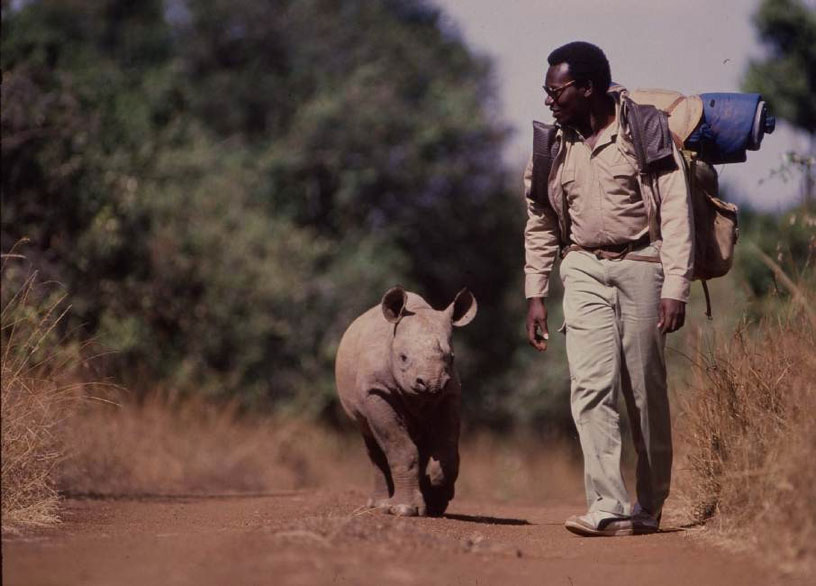
Walking with Sam, 1987.
In this powerful image, Kenyan conservationist Michael Werikhe, known worldwide as “The Rhino Man,” walks alongside a young rhino named Sam during one of his epic awareness treks. At a time when poaching was decimating rhino populations, Werikhe embarked on extraordinary solo walks across Africa, Europe, and the U.S. — carrying only a backpack and an unshakable resolve. Each step was a global call to save the species from extinction. His quiet courage inspired a movement, proving how one person’s conviction can stir the world to act.
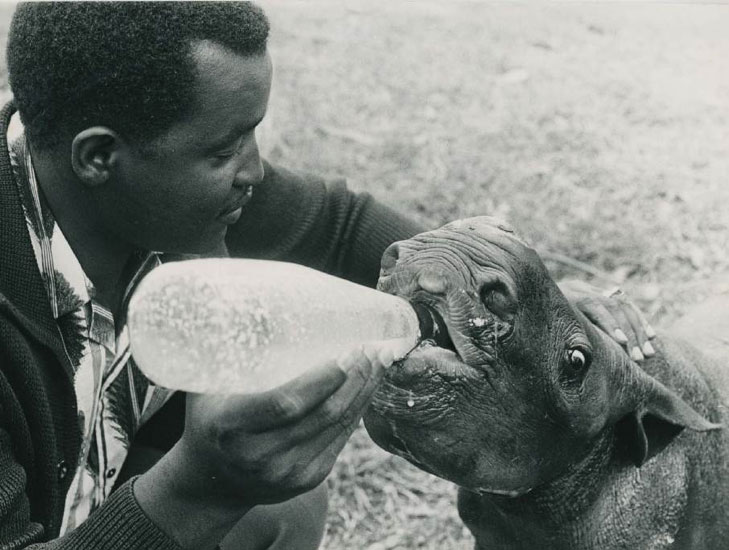
Hope in a Bottle, 1975: Sam Ng’ethe tenderly feeds Kioko, an orphaned rhino calf, with a bottle of milk — a powerful image of compassion and dedication. During this period, many young rhinos lost their mothers to poaching and could only survive through the tireless care of conservationists.
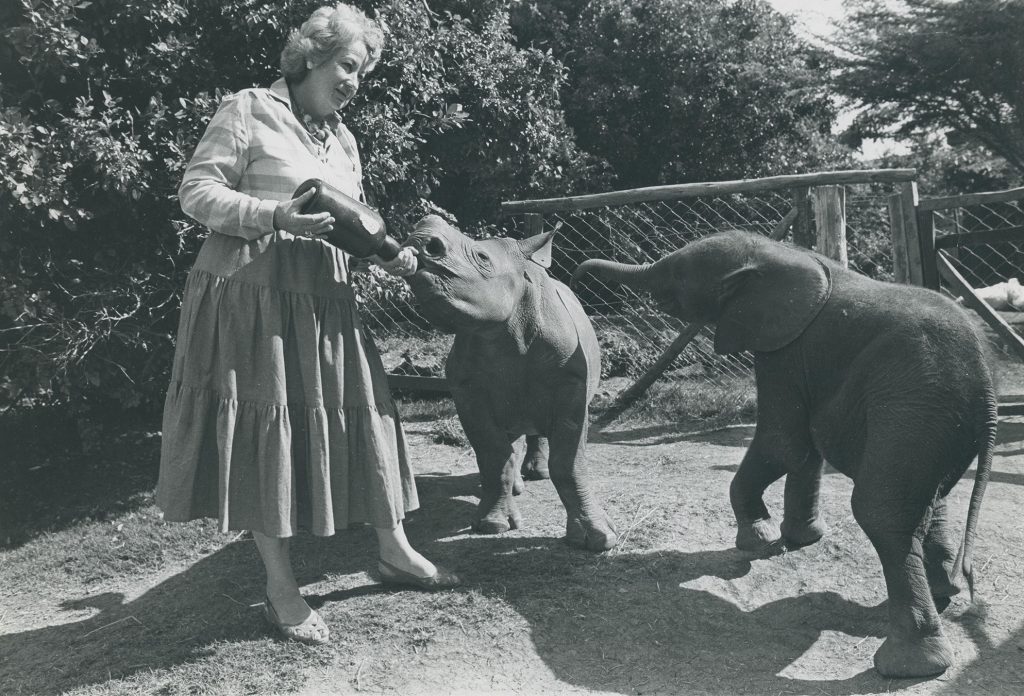
Daphne bottle-feeding Rufus, an orphaned baby rhino, at Tsavo National Park, Kenya, in May 1989, she is watched by a young elephant calf, also an orphan of Tsavo. Together, they embody a tender moment that highlights Sheldrick’s pioneering dedication to caring for orphaned wildlife.
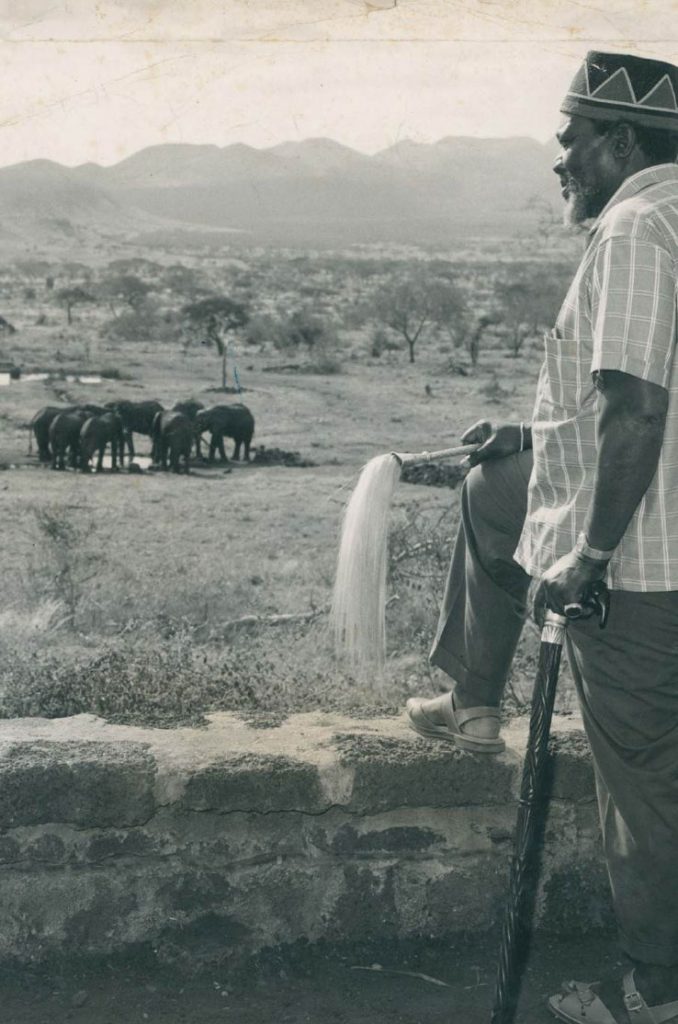
Prime Minister Jomo Kenyatta at Tsavo, 15th September 1963: Prime Minister Jomo Kenyatta gazes over a herd of elephants during his visit to Kilaguni Lodge in Tsavo National Park, a few months before Kenya’s independence. The moment captures more than a leader on safari - it reflects the dawn of a nation reclaiming its heritage and natural treasures. Tsavo, one of Kenya’s earliest National Parks, symbolized the new government’s vision of conservation and pride in the country’s rich wildlife


MUST READ