
Search Luxury Life Kenya

Generic selectors
Exact matches only
Search in title
Search in content
Post Type Selectors


ARTS & CULTURE

MOHAMED AMIN: People of Kenya


WRITTEN BY SALIM AMIN

 
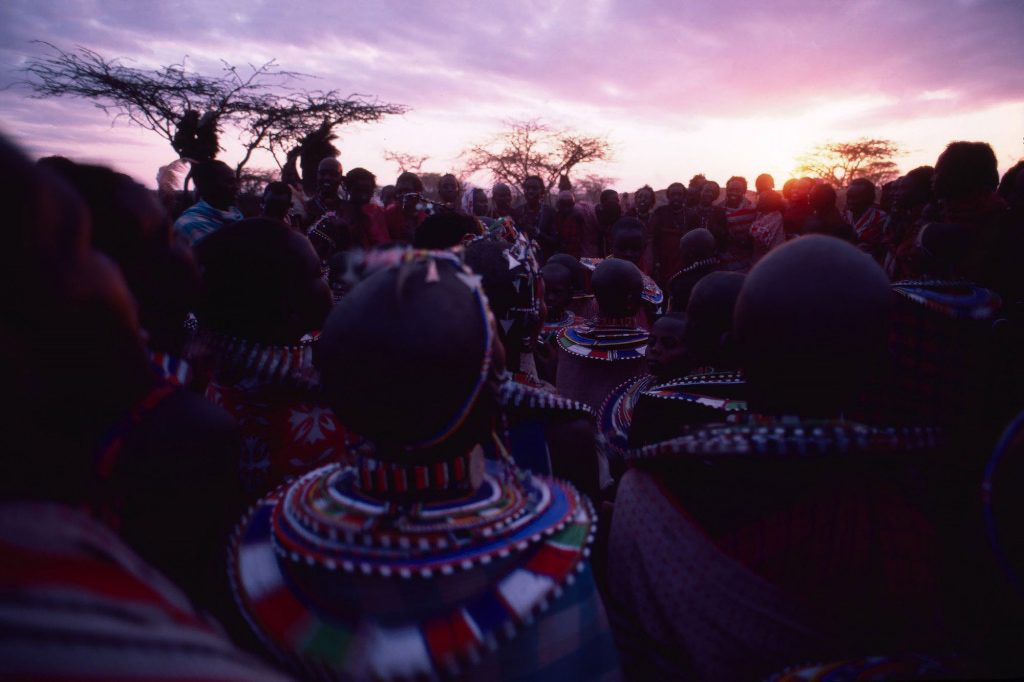
Maasai young women during a sunrise ceremony.[1980s].
The scene captures a moment of cultural significance as the young ladies gather at dawn.

The turmoil of Africa ’s emergence into the 20th century has long been the focus of the critical eye of the Western World. From exploration to exploitation; from fear and famine to fame and fortune; from war-torn horror to wildlife wonder; it has all been exposed to the relentless gaze of the international press.

No one has caught the pain and passion more incisively than Mohamed Amin, photographer and frontline cameraman extraordinaire. He was the most famous photo-journalist in the world, making the news as often as he covered it. ‘Mo’ trained his unwavering lens on every aspect of African life, never shying from the tragedy, never failing to exult in the success.

Born in Nairobi, Kenya on 28 August, 1943, the second son of a poor railway worker, Mohamed Amin (“Mo”) was soon faced with racism, an inevitable product of colonialism. He never forgot those underdog years and fought against prejudice the rest of his life.

From the time he acquired his first camera, a second-hand Box Brownie, Mo’s future was determined. Quickly he learned photographic and darkroom skills and was already applying them to commercial use when he went to secondary school in the then Tanganyika. Before he was 20 he was a recognized force as a freelancer in Dar es Salaam and his work appeared in all the Fleet Street national newspapers.

He witnessed and recorded the alternating currents of his beloved continent and beyond, projecting those images across the world, sometimes shocking, sometimes delighting millions of television viewers and newspaper readers.

Silhouetted against the setting sun, El Molo youngsters punt their doum-palm log raft, returning with the day’s scavenged browse for the island’s goats. [1975].
The scene captures a peaceful moment of daily life as the El Molo youth navigate the waters, carrying nourishment for their community.
Through the gaze of his camera lens, he showed the world what some were afraid to see and what most people wished they could ignore. His coverage of the 1984 Ethiopian famine proved so compelling that it inspired a collective global conscience and became the catalyst for the greatest-ever act of giving. Unquestionably, it also saved the lives of millions of men, women and children. He served as both the inspiration and as a catalyst for Band Aid, USA for Africa and Live Aid.

In a career spanning more that 30 years, ‘Mo’ was our eyes on the frontline in every situation and his honest unwavering approach to photojournalism earned him the unconditional respect of both friends and enemies alike. Mo covered every major event in Africa and beyond, braving 28 days of torture, surviving bombs and bullets, even the loss of his left arm in an ammunition dump explosion, to emerge as the most decorated news cameraman of all time.

His chronicling of the remarkable people, cultures, landscapes, flora and fauna of his beloved Continent was not given the same attention as his coverage of major news events, but was arguably more import in documenting the history of sub-Saharan Africa. He published over 75 coffee-table books highlighting the beauty of the Continent.

Mo’s remarkable life was cut tragically short in November 1996 when hijackers took over an Ethiopian airliner forcing it to crash land in the Indian Ocean killing 123 passengers and crew. Mo died on his feet still negotiating with the terrorists.

By any standards, Mo’s life was truly extraordinary; action-packed, full of pain and passion and inseparable from the troubled chronicle of emergent Africa. □

Discover More

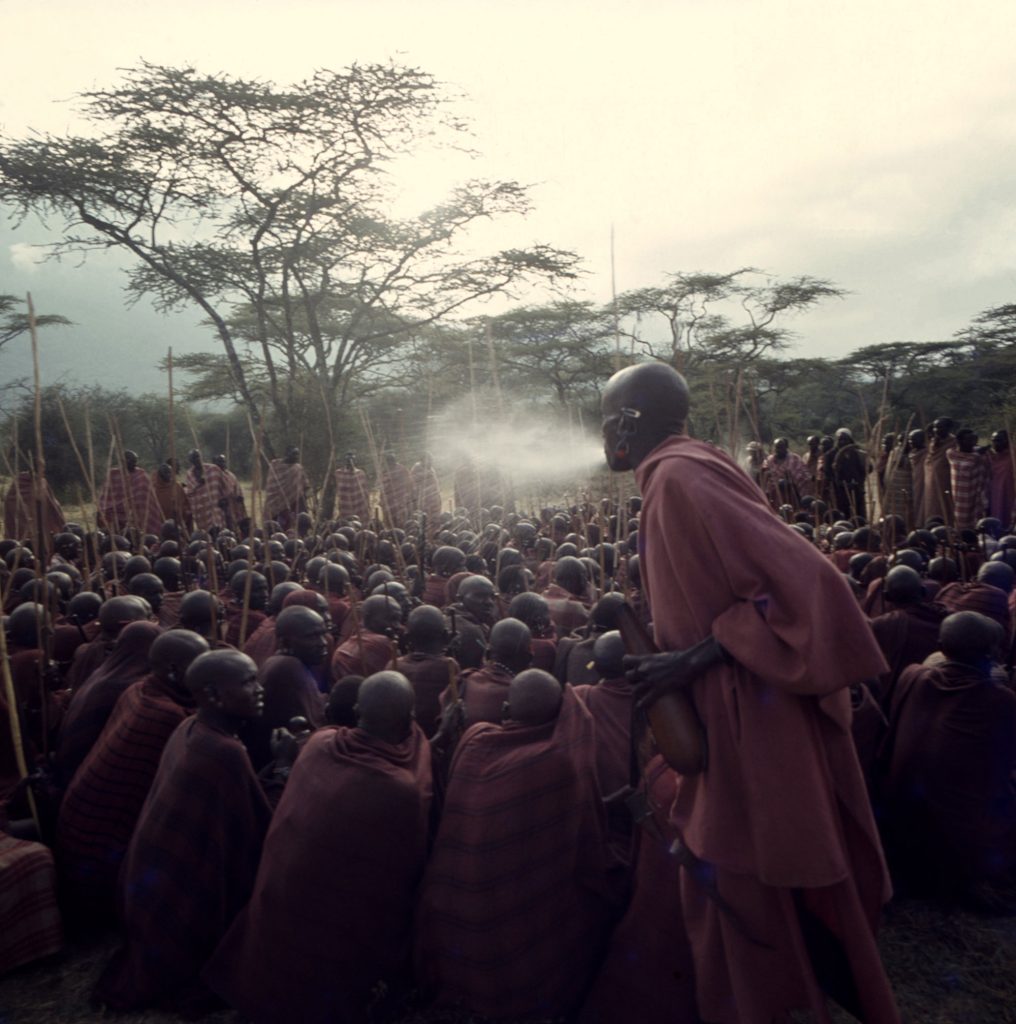
A spray of milk from the mouth of an elder bestows a benediction over the squatting ranks of Eunoto graduates. [1980s].
This sacred gesture symbolizes the elder’s blessing, marking the spiritual transition of the young warriors into senior ranks during the Eunoto ceremony. The milk, a symbol of purity and nourishment, signifies the passing of wisdom and strength to the graduates.
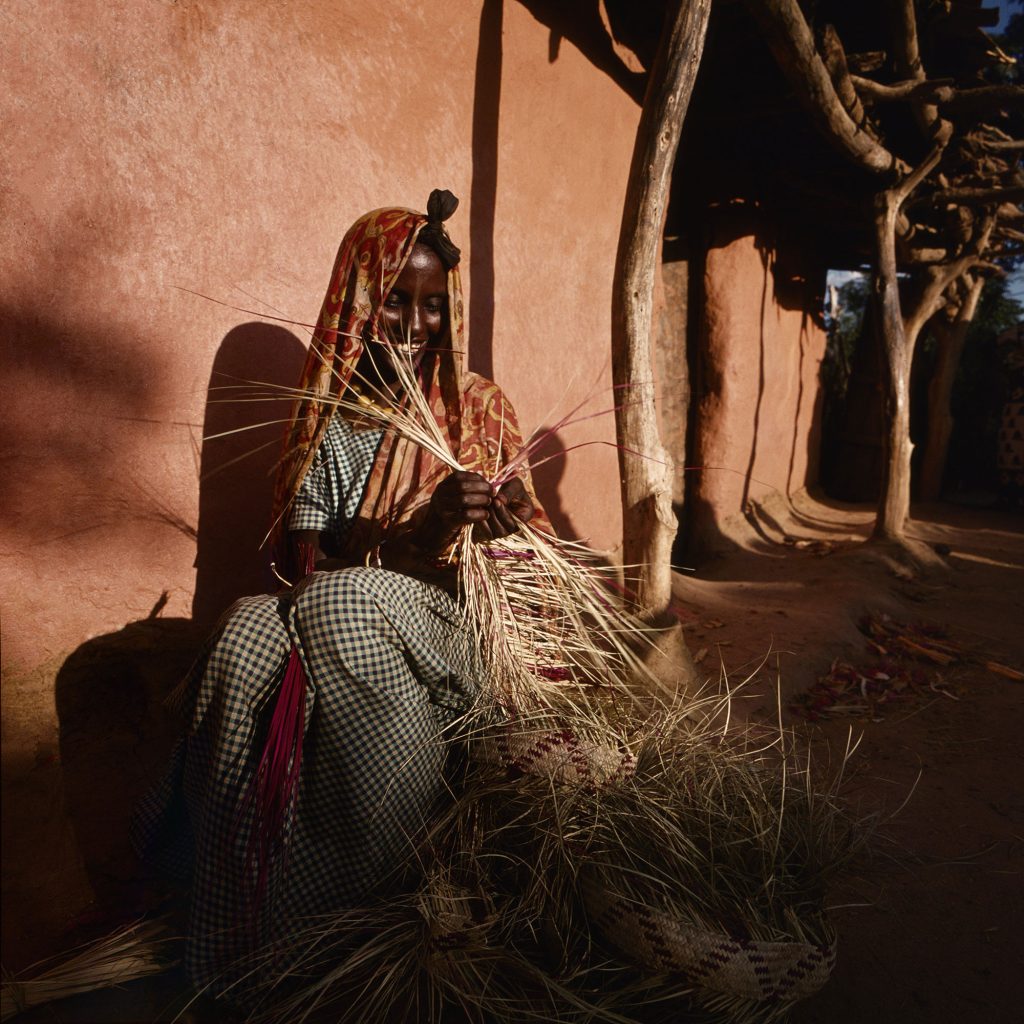
With a smile of concentration, a finely featured Boran woman weaves a sleeping mat from palm fronds in the shade of her home in northern Kenya. [1980s].
This serene moment captures the craftsmanship and dedication of the Boran community. As she carefully weaves the mat, her smile reflects the joy and pride she takes in this traditional practice, showcasing the community’s resourcefulness and strong connection to their heritage.
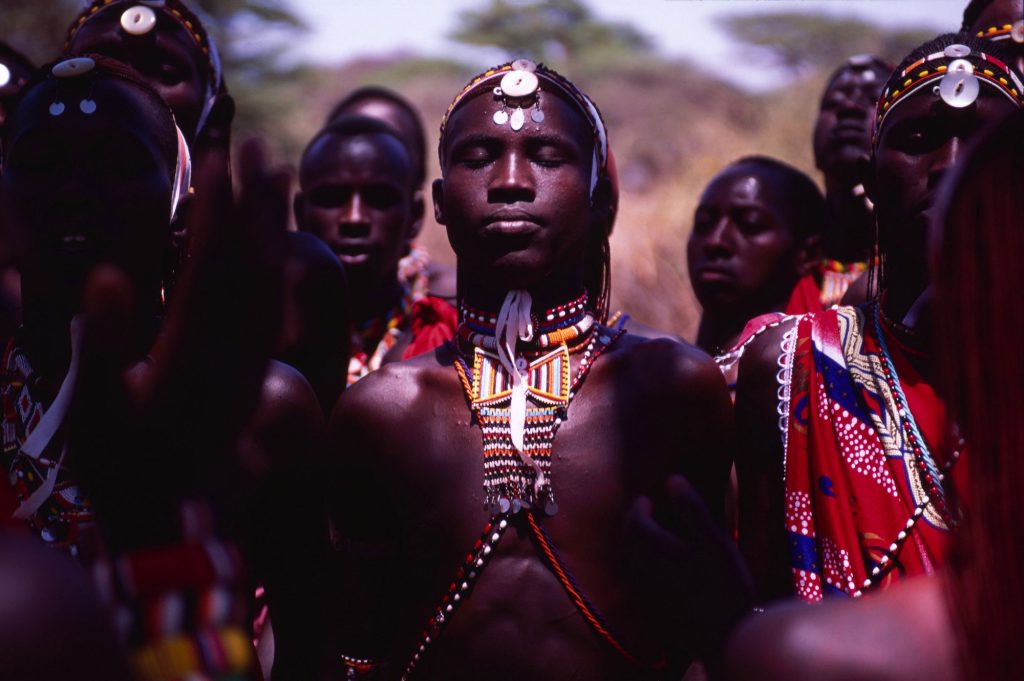
Maasai morans during the Eunoto ceremony. [1980s].
This ceremonial gathering marks a pivotal rite of passage for Maasai warriors, known as morans, as they transition from junior warriors to senior warriors. Eunoto is a deeply symbolic event involving traditional rituals, songs, and blessings, signifying maturity, readiness for greater responsibilities, and eventual integration into elderhood within the Maasai community.
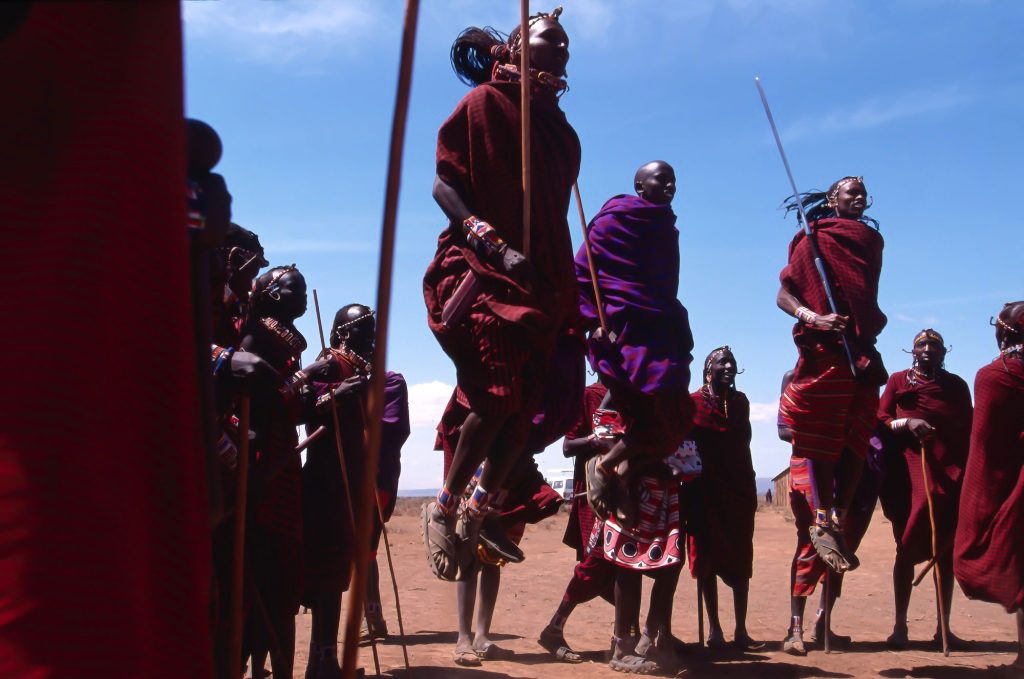
Maasai warriors performing a traditional jump dance. [1980s].
The jump dance, known as adumu, is a vibrant and energetic display of strength and agility, where Maasai warriors leap high into the air as part of a ceremonial performance. This dance is often performed during celebrations and rites of passage, symbolizing bravery, endurance, and unity within the community.


MUST READ