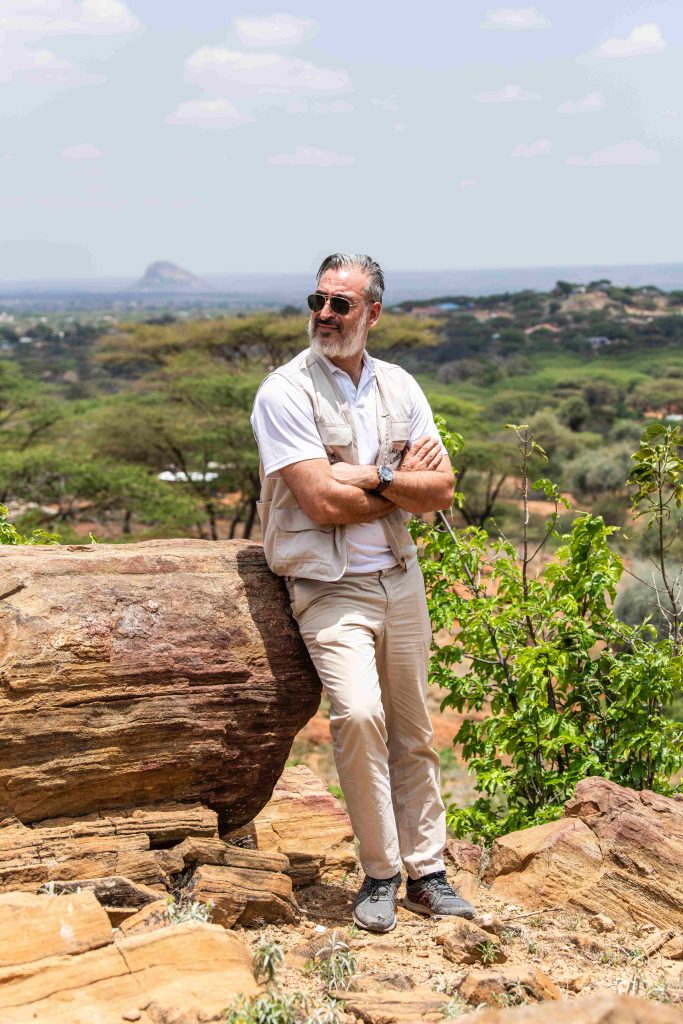
Tommaso had spent years in the arid lands of East Africa learning about the land and the people. In this time, he learnt about the raw materials in the area, gum arabic, frankincense, and myrrh. “I wasn’t going to compete with the locals; they are brilliant and can move anything. We thought that we could be a commodity agency, but we knew we couldn’t win over the Somalis in the area, so we re-strategised.”
Tommaso realised that he could distil the frankincense and myrrh into essential oils, so in 2018, when Agar started, it modelled from only dealing with raw commodities to making essential oils with frankincense and myrrh, as well as eucalyptus, since it is also available in Kenya. In 2019, we were ready to expand I pitched my idea to a Japanese investor to export gum arabic and resins, both raw and distilled
The Not So-Surprise Meet Up. “I used to go to the gym with a friend of mine in Parklands. While we were catching up, he told me that he’d just received funding from a Japanese investor. I immediately asked him how I could do it. He explained that they were extremely private, and the only way they might consider an opportunity was if I just so happened to be at the same place they were meeting later and pitch my idea. That is exactly what we did.” Tommaso was introduced, pitched his idea, and ‘boom’ — the Japanese investor bought the idea, and Agar had its first investor. He gave Agar $150,000.
Tommaso had his lucky first break. He went to the field and set up a network of agents and collectors to allow Agar to expand. By the end of 2019, they had launched their first brand of essential oils. After this, Tommaso applied for grants from the German Embassy and the British Embassy, all of which, even after a few unsuccessful applications, were eventually successful.
COVID hit businesses hard in 2020, but Agar stayed afloat by selling essential oils to HealthyU. “During this time, we also began to set up Jua’s Aloe division, which has now become so prominent.
We started approaching hotels in Nairobi, and in 2022, we secured deals with the Fairmont and Mövenpick hotels, which gave us the push we needed.”
Restoring the landscape. “Jua means sun in Swahili. We named it so because the sun in Samburu and Marsabit rules those areas, and Jua is connected to those lands in the North.” It is hot and dry, and the land seems barren, but this is where Jua’s raw materials come from, and where Jua is investing in the community.
Agar’s principles are empowerment, biodiversity, conservation, sustainability, and landscape restoration. Agar works with NGOs and trusts that collaborate with the communities, giving them aloe seedlings. The NGOs then empower the pastoralists to grow the aloe. When the aloe is ready Agar buys from the local farmers. In arid areas such as the North, where the land is dry, aloe can thrive with minimal water and on infertile land. The farmers nurture the aloe for two to three years before Agar returns to purchase their harvest. This model has changed lives in the North. An acre of aloe can bring a farmer about 60,000 to 80,000 Kenyan shillings from selling just the leaves.
Aloe also works as a land restoration tool.
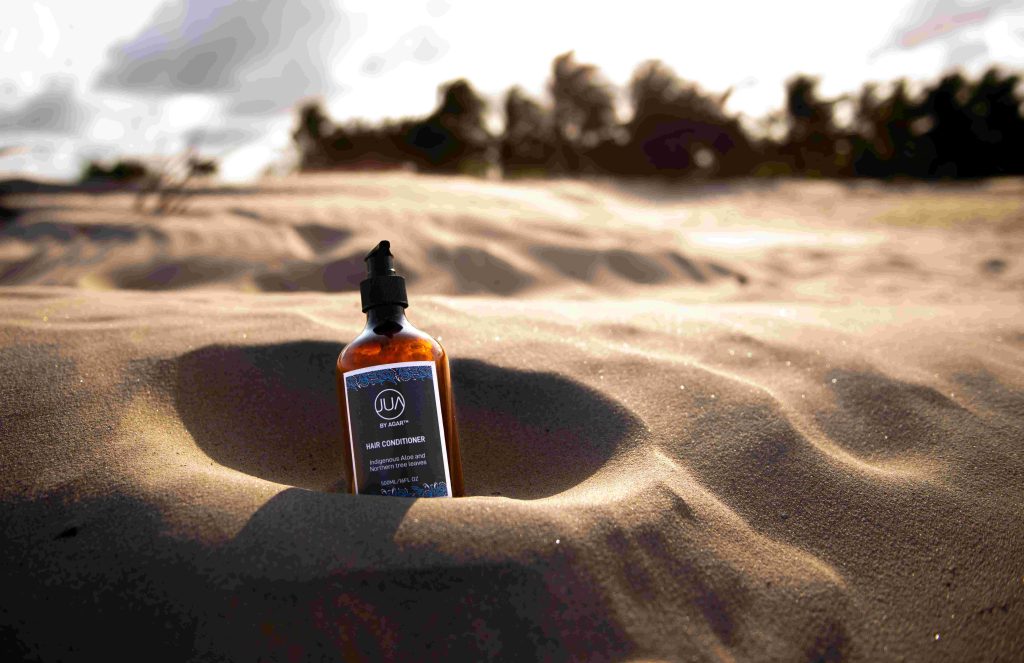
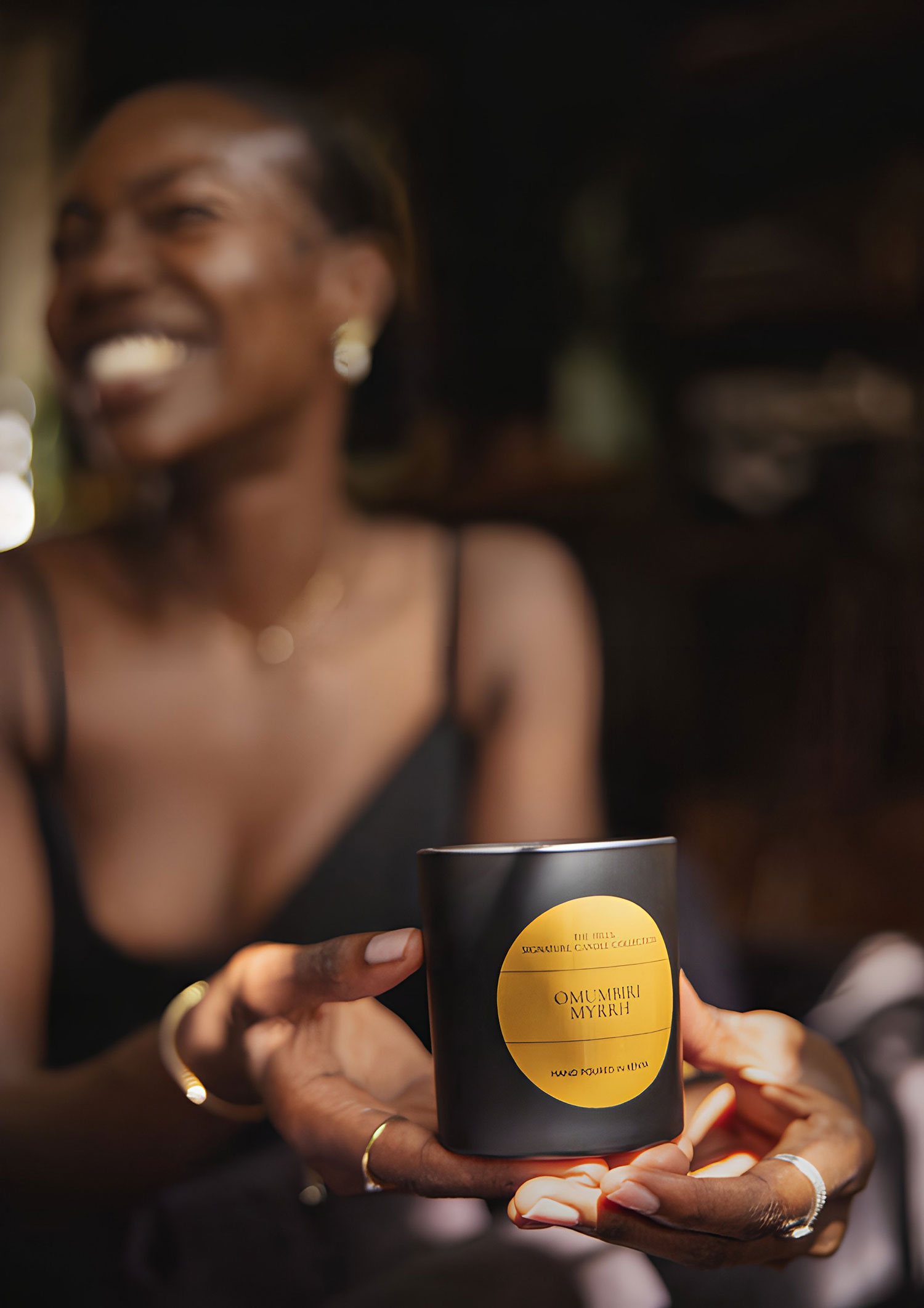
Where the land was once seen as barren, it can now be used to create employment and empower the community. Agar also buys frankincense and myrrh from the locals. In Laikipia and Samburu, Agar purchases aloe leaves and sometimes powder from a group of Maasai women. From these raw materials, Jua creates some of their cosmetic products.
Jua is intentional in supporting local farmers, impacting some of the most remote communities in northern Kenya. There is so much about Kenya that remains unknown, and so much that the North can offer the world. Jua is ensuring that these resources do not go to waste.
Jua is expanding, aiming not just to bring impact and development through retail, but soon through opening a wellness centre. Jua wants to heal the body using these Kenyan-sourced ingredients. The experience would give people a feel of Kenya’s lands and the warmth of her sun.
“Even if I wasn’t doing Jua, I would still want to be in development. Maybe in waste management or biofuels – something that would make an impact here in East Africa.”
Tommaso is also passionate about teaching and giving business owners the tools to create successful businesses in Africa. Teaching and coaching on compliance, Tommaso shares skills that he wishes someone had given him when he was starting out.
When Tommaso left Italy for Australia, he was a young man determined to follow in his father’s footsteps, guided by his mother’s wisdom. Few could have imagined that his journey would lead him to some of the most arid and remote places in East Africa. Even fewer could have foreseen the remarkable impact Jua would have on these communities. “Sometimes, as I lay in bed at night or rest on the couch after a long day, I feel like I’m wasting vital time-time I could use to create more impact, because there’s still so much to do.”
Tommaso describes himself as “a man of purpose,” and one of his greatest motivations is his son, Dante. He specifically requested that this piece be dedicated to him. □
Discover More