Search Luxury Life Kenya

Generic selectors
Exact matches only
Search in title
Search in content
Post Type Selectors
ANNABEL ONYANGO
Conversations

ANNABEL ONYANGO

INTERVIEWED BY VALERIA TORNER
PHOTOGRAPHY BY ASHTON ALLERT


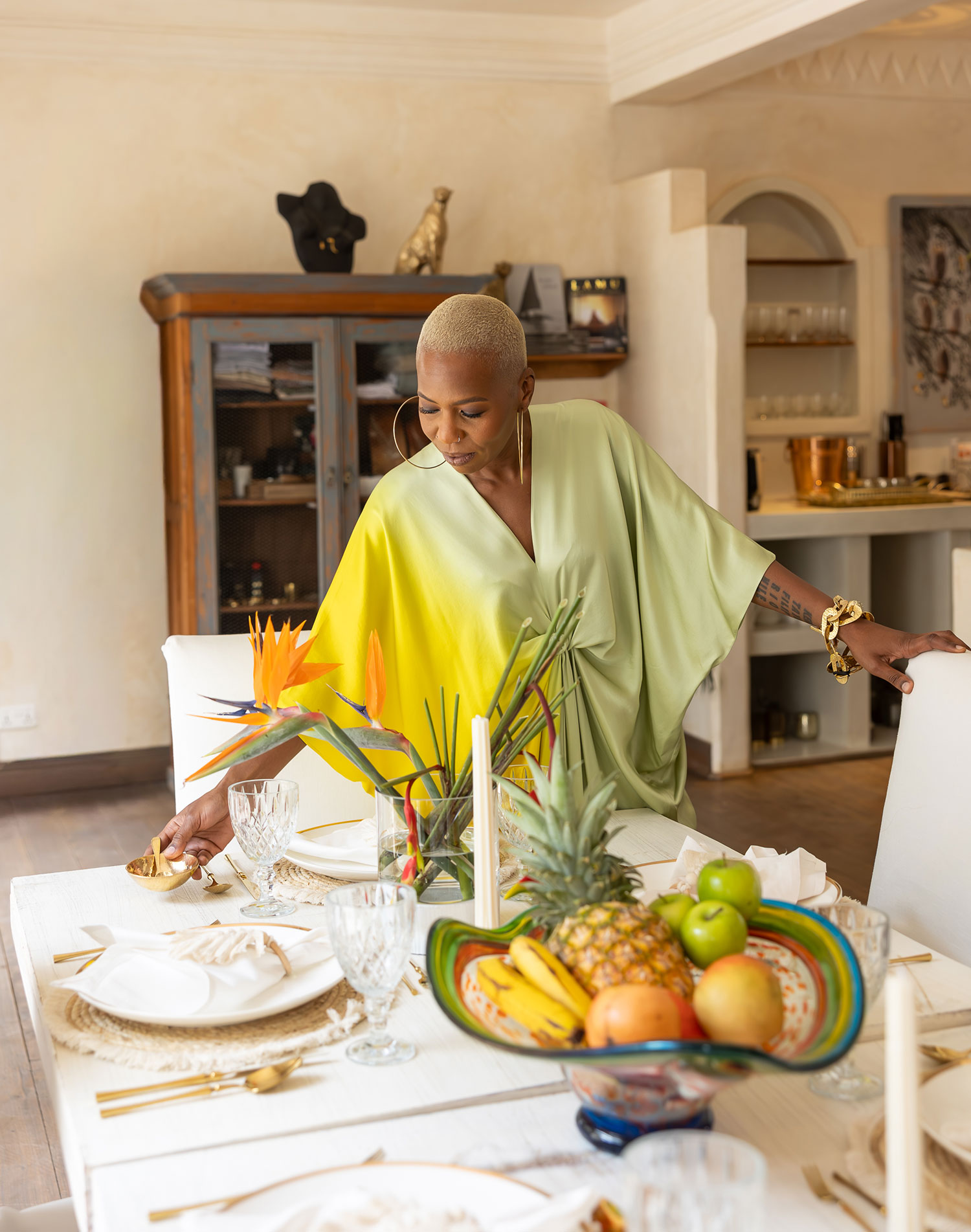
When I met Annabel Onyango at Manzili House in Karen, it immediately felt like the right setting for her story. Manzili describes itself as a luxury boutique home away from home, and that’s exactly what it is — calm, elegant, and full of quiet character.

Surrounded by soft light, handcrafted details, and the stillness of nature, our conversation unfolded in that effortless way that happens when someone is completely at ease. Annabel spoke about her journey from environmental studies to fashion and interiors, her love for craftsmanship, and her celebration of Kenyan-owned brands and the rich artistry of African heritage.

What struck me most was her sense of purpose. She doesn’t just style spaces or clothes — she curates meaning. connection, and identity Speaking to her felt like stepping into her world: thoughtful, grounded, and beautifully intentional.

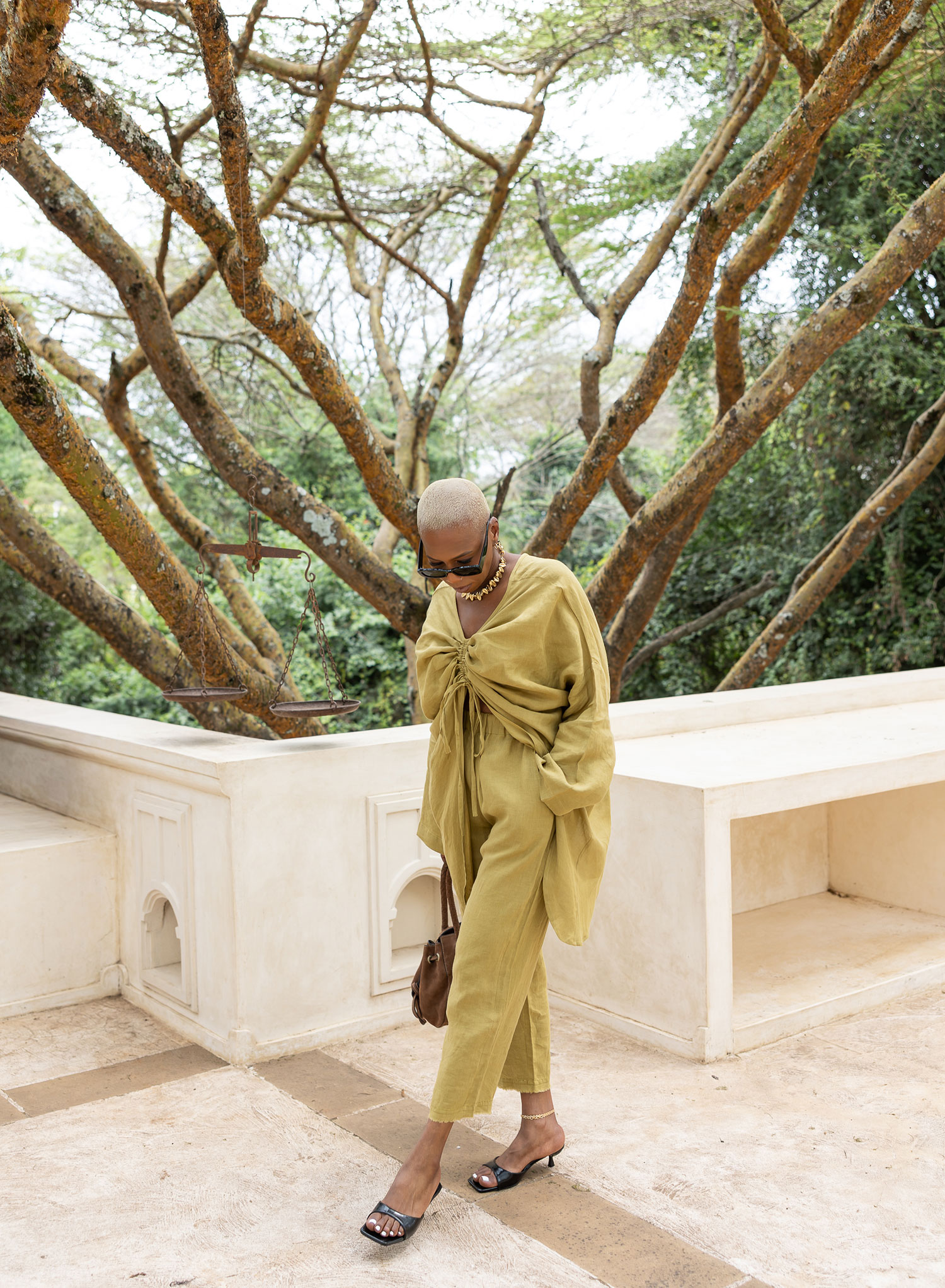
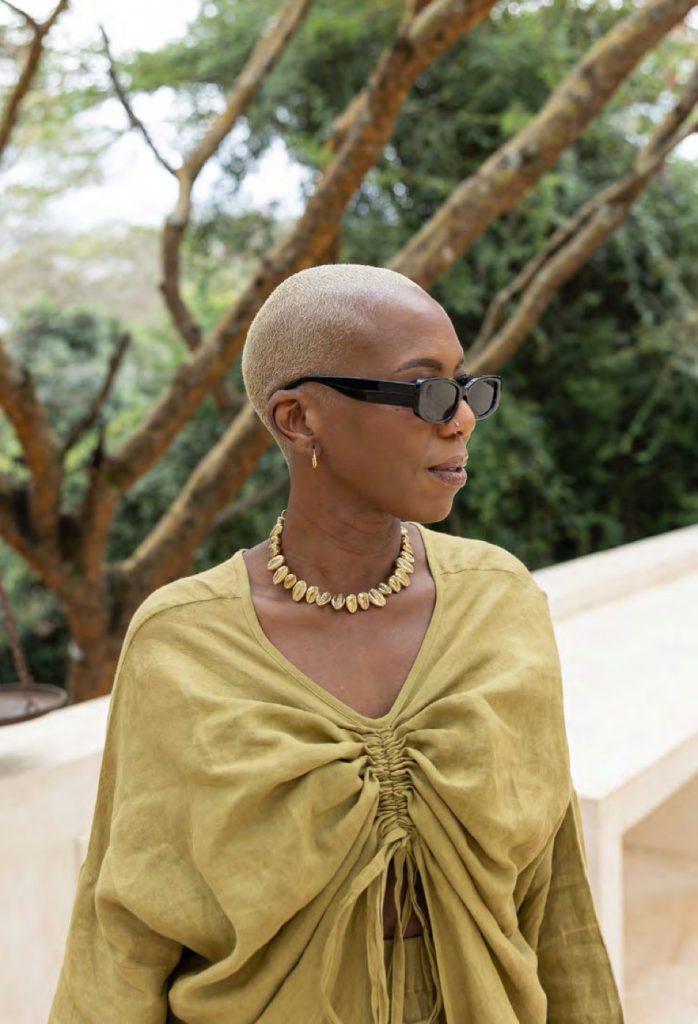
Annabel wears Ra by Rushina Butterfly Top and Frey Pants in olive, made from COTS-certified linen, with hand-stitch detailing Brass necklace Ra by RushinaUrban Ranch Twiga Tassel in dark brown; urbanranchkenya.com

Background & Personal Journey

You started with degrees in Environmental Studies and English Literature, then transitioned fully into fashion and interiors. What sparked that “pivot,” and how do those fields still inform your approach to styling today?

Yes. I landed in Nairobi in 2006, thinking I would become an environmental journalist. Instead the opportunities presented to me were in fashion and lifestyle journalism, and I happily stuck to that. As my creative career developed, I leaned exclusively into the Made-In-Kenya space, which is generally more ethical and environmentally sustainable. So in the end I very much apply the principles of my academic degrees and critical thinking skills.

It’s important for me to support and champion fashion and lifestyle products that aren’t mass-produced, but instead handcrafted in limited-batch quantities within a slow model of consumption. It’s also important for consumers to have a connection with the Makers of the things they buy, giving those products more meaning, substance, and depth. I find a great deal of professional and personal fulfillment in this.

Being born in Côte d’Ivoire, having lived in multiple countries, and now based in Nairobi — how have those different geographies shaped your aesthetic and your sense of home?

I’m very much a pan-African. I love living in Nairobi of course, but I still have a lot of nostalgia for my West African roots. Culturally East and West are very different, and it’s always interesting to be able to embody both those sides of me.

Ivorian/West African fashion is the blueprint to me. They have a very strong sense of heritage, and it comes through very explicitly in their fashion. I love how West Africans interpret traditional costumes into contemporary luxury and streetwear. I also love how young East Africans are spearheading a burgeoning arts and culture scene that is so unique to this part of the world and amplifies local talent. It’s the collective energy from all sides that keeps Africa vibrant and culturally interesting from a global perspective.

Can you recall an early moment — maybe a project or challenge — that made you realise that styling was not just a job for you, but a calling?

I knew I was deep into the styling thing when I became the Group Fashion Editor at a lifestyle company called East Africa Magazines. It was a period when I was able to really deep-dive into the Kenyan fashion industry and foster relationships which I use to this day.

The Craft & Philosophy 

You speak about wanting to express an authentic African identity in your work. What does “authentic African-ness” mean to you in terms of colour, texture, silhouette, or space? How do you avoid clichés while still rooting your work in locality?

Being “African” is such a subjective thing. Africa is so diverse and Africans are not a monolith.

On a personal level my own African-ness is drawn from so many different influences – being born in Côte d’Ivoire to Kenyan parents, growing up internationally. having a colourful education from elementary school to university, and eventually settling in Nairobi into an ethnically-mixed community. All these experiences inform my version of what being an ‘authentic’ African is.

My creative perspective is the sum of all my exposure and experiences, while still holding on to my core as a child of Luo heritage.

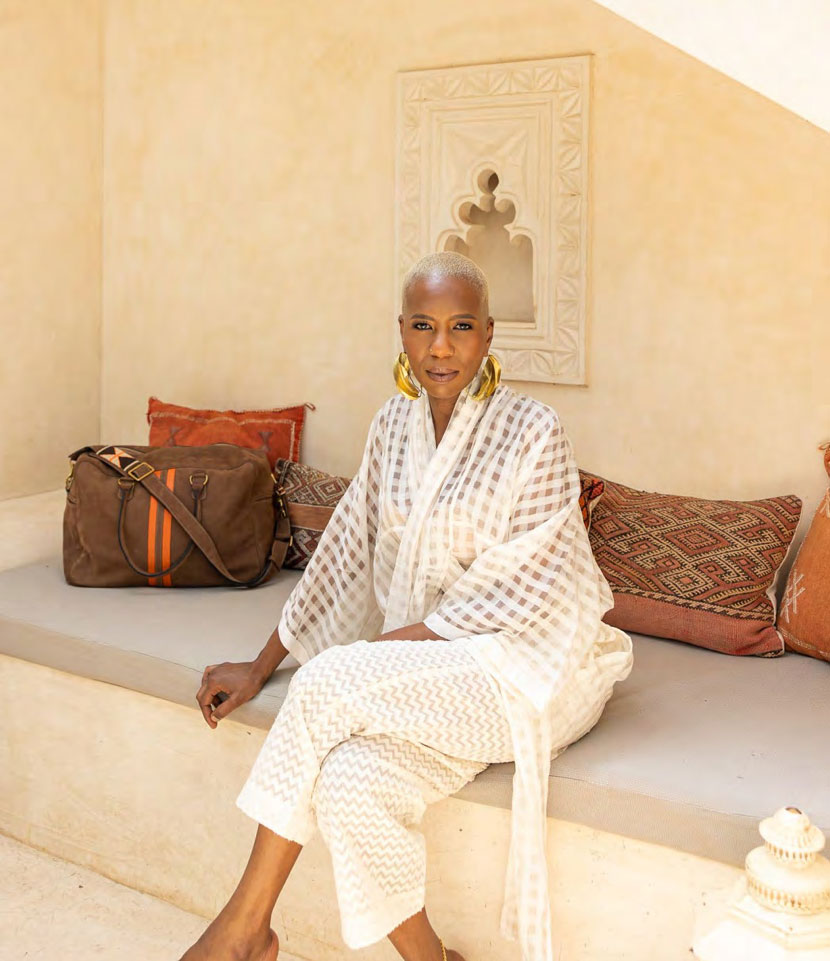
Annabel wears Ra by Rushina Lumina Overlay and Tilt Pants, handloom cotton with silk detailing at the seams. Notting Hill Weekend Bah by Urban Ranch in brown; urbanranchkenya.com

When styling interiors or fashion, what are the common threads in your process? Are there principles or rituals you follow that bridge both disciplines?

For me, styling fashion and interiors always requires the following principles:

  • Use NATURE as a reference: The world God created is perfect in every way; just borrow its colours and textures and apply them in everything you do.
  •  Automatically apply CONTRAST: Soft and hard, smooth and textured, light and dark, bold and subtle, wide and thin
  •  Build a STRONG FOUNDATION first: Once you’ve created a solid plan and established a strong base, layering everything else on top becomes easier to do.
  •  Have a LESS-IS-MORE approach: Good design shows maturity when it’s a little restrained and permits itself to say “enough”.

How do you choose your collaborators – whether designers, artisans, makers — and what do you look for in terms of values or methods in those collaborators?

It depends. People or brands will either approach me, or I’ll discover work that I’m drawn to and make a connection with the Makers. My general requirements for a partnership are that the product they make or the service they provide be something I would genuinely use in my own life. The more I authentically like something (aesthetically and ideologically), the more likely I’m going to go hard on a collaboration.

Once I understand their production processes and we’re aligned on our professional philosophy – good quality handmade products, sustainable production models, and compelling storytelling. The way I see it, people don’t just buy a product, they also buy into a story attached to that product. Once that mission is clear, I’m happy to work!

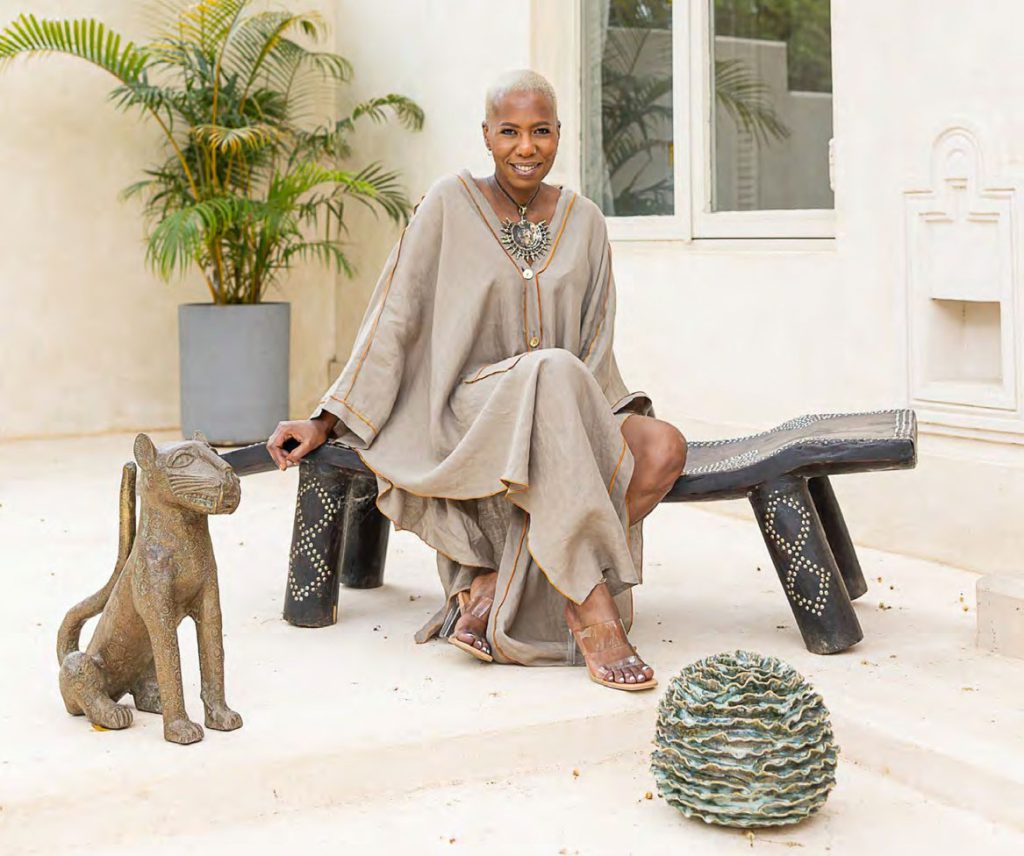
Annabel wears Ra bu Rushina Breeze Kaftan, GOTS-certified linen in donkey with sienna thread detailing and hand-cast buttons . Pendant by Ra by Rushina. Fractal 4 by Lana Trzebinski

Challenges & Growth

What have been some of the biggest misconceptions people have about being a stylist, especially in Kenya/Africa, and how have you had to push against those?

Hazaa! The biggest misconception about being a stylist in Kenya is that it’s always glamorous. That it’s only about going to parties and events and wearing cute outfits. At some point in my career after getting established, I stopped going to events or doing press-related things altogether. I now understand that you can work and be good at this without needing constant exposure. The same thing applies to social media. Outgrowing the need to ‘be seen’ or validated by strangers is liberating and allows you to channel that energy into more productive things like serving the industry. 

The fashion world globally is grappling with issues like sustainability, fast fashion, and ethical sourcing. Where do you see Kenya (and African fashion/interior design more broadly) in that conversation, and what role are you playing?

Yeah I think the COVID-19 era awakened the global consciousness about the ethics of fashion production, distribution, and waste management. But post-pandemic the global systems and players have largely remained unchanged; in fact things seem to be getting worse. It’s easier for people to maintain the status quo than face the reality of their impact on far-off communities and the planet.

In many ways I’m happy to live in an economy that generally exists outside of the mass production model. I’m glad that as a developing country Kenya isn’t so deep into the system that the sustainability conversation can still be had and heard.

Kenya/Africa is still very much a burgeoning source of creative talent and inspiration for the world, and the potential to monetize our talents within alternative systems of production and distribution is high. It’s an exciting time to be a Kenyan Creative.

Identity, Influence & Culture

How do gender, motherhood, or your roles beyond styling (eg. as a public figure) shape decisions in your work — in looks, in messaging, in the stories you want to tell?

My kids have definitely absorbed my lifestyle without me having to explicitly spell it out to them. They understand the concept of “handmade” (clothes and objects) and are very much maturing into their own personal style and understanding that how you look on the exterior is a reflection of how you feel internally and what your belief system is.

I consider myself less a public figure and more a stable and unwavering influence on my kids and on the followers for whom these things matter.

What cultural narratives or stories do you feel are under-told or misunderstood about Africa or the Kenyan style, that you want to bring to the forefront through your work?

One disheartening aspect of the Kenyan style is the lack of a strong heritage story that unites us. People are lost in a sea of mitumba (second-hand) clothing and generic big box furniture stores. Somewhere along the way generational artisanry and skilled craftsmanship have been replaced with bland westernization.

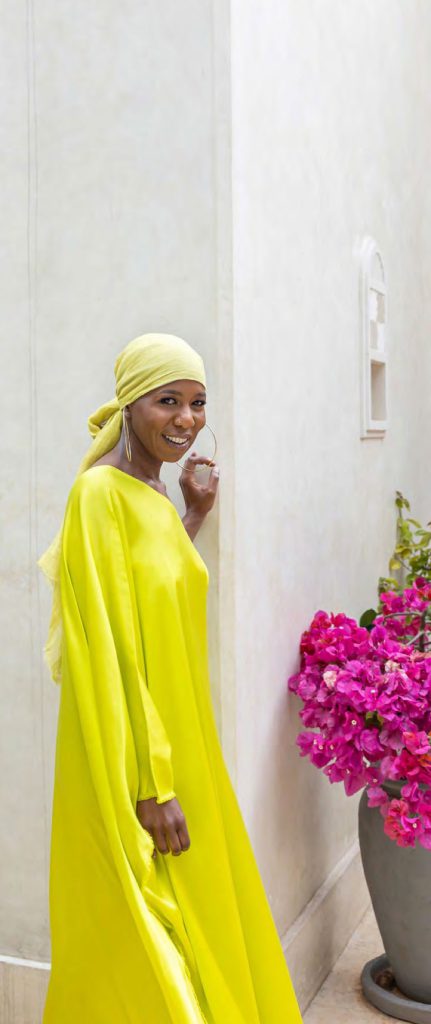
Annabel wears Ra by Rushina Celeste Off The Shoulder Dress, hand-dyed satin. Photographed at Manzili House. www.manzilicollection.com

Much credit is due to the Kenyan Designers and Handmakers who continue to supply their products to a niche customer base that really appreciates the richness in quality and design. I think of myself as one of the voices that amplify this local talent everywhere I can.

What influences outside of fashion and interiors feed your creativity (literature, music, travel, environment, etc.)? Can you share an example of when a non-fashion influence unexpectedly shifted how you styled something?

Travel is an obvious influencing factor in the way I see clothes and style. Sure, I’m constantly online studying global trends, but nothing provides inspiration quite like experiencing different people and cultures IRL. (in real life). One thing on my bucket list for the coming seasons of my life (as my kids become more independent) is to see more of this continent and beyond. 

Fine art is another way I find inspiration. I’m very specific about the style of art I’m drawn to (typically African portraiture) which somehow mirrors my professional mission.

A contemporary African art scene is currently exploding in Nairobi, creating opportunities for creatives to converge around art while layering in fashion, music, interior design, literature, performative arts, gastronomy, etc. Art spaces are ripe ground for collaboration.

Vision & Legacy

Looking ahead, what is the legacy or impact you hope to leave? What do you hope people feel or think when they see your work five or ten years from now?

I’ve never been one to keep doing one specific thing for long. I hope to keep evolving in the Made-In-Kenya space. I hope to be able to keep helping local artisanal businesses scale, continue creating access to markets, and export opportunities, all in a sustainable way.

Beyond being known for wearing cool clothes, I want to be a valuable voice in the Made-In-Kenya handmade industry that helps it develop and evolve to become more mainstream within Kenya itself, and later beyond.

What is “luxury” to you — both in fashion/ interior terms, and in terms of living a meaningful life – and how do you embody or redefine that in your work?

Luxury to me is less about how much things cost, and more about how they make you FEEL. Luxury is an experience that transports you, or a pair of shoes that makes you feel like the best version of yourself.

I always say that I feel most MYSELF when I wear Made-In-Africa. Putting on and surrounding myself at home with products that are locally handmade and that I have consciously handpicked, this is luxury to me. Doing work that I believe in and that drives my purpose every day – this makes me feel like I have a luxurious life.

The magic of Made-In-Africa fashion and interiors is that, when done right, they’re rooted in design heritage, compelling storytelling, care for community, and sustainable materiality, giving them the substance and quality that equates to luxury.

Quick Fire Questions

A piece you can’t live without in your wardrobe

I can’t live without my @TUG oversized blazer that I wear all the time, and when people invariably stop me to ask where it’s from, I tell them – Kibera.

What is your favourite city in the world, and how does that show up in your style?

I love Dakar. It’s such a culturally dense city. Senegalese people have so much national pride, it’s apparent in every aspect of that place — fashion, interiors, food, clothes, language, etc. I envy their collective level of self-assuredness.

Bubu is my favourite style of clothing, everyone there wears them so elegantly. The contemporary interpretation of the Bubu and other traditional styles by a new generation of Senegalese is something to behold.

What’s a mistake that you made earlier in your career that you now consider an important lesson?

Mistake? I probably made many, but they led me to where I am now. So actually, nothing is a mistake. I am very grateful for this journey. 


MUST READ