Search Luxury Life Kenya

Generic selectors
Exact matches only
Search in title
Search in content
Post Type Selectors
THE WOMAN WHO GOT NAIROBI MOVING
Conversations

THE WOMAN WHO GOT NAIROBI MOVING

WRITTEN BY VALERIA TORNER
PHOTOGRAPHY BY ASHTON ALLERT


Emily Chepkor grew up in Kapsabet, a town in Kenya’s Rift Valley that has produced more world-class runners per square kilometre than almost anywhere on earth. And yet she did not run as a child. She came to running as an adult, through personal reinvention, and turned it into a movement that has reshaped how a generation of Nairobians thinks about their bodies, their city, and their mornings. Today, We Run Nairobi draws more than 1,200 people onto the streets at dawn.

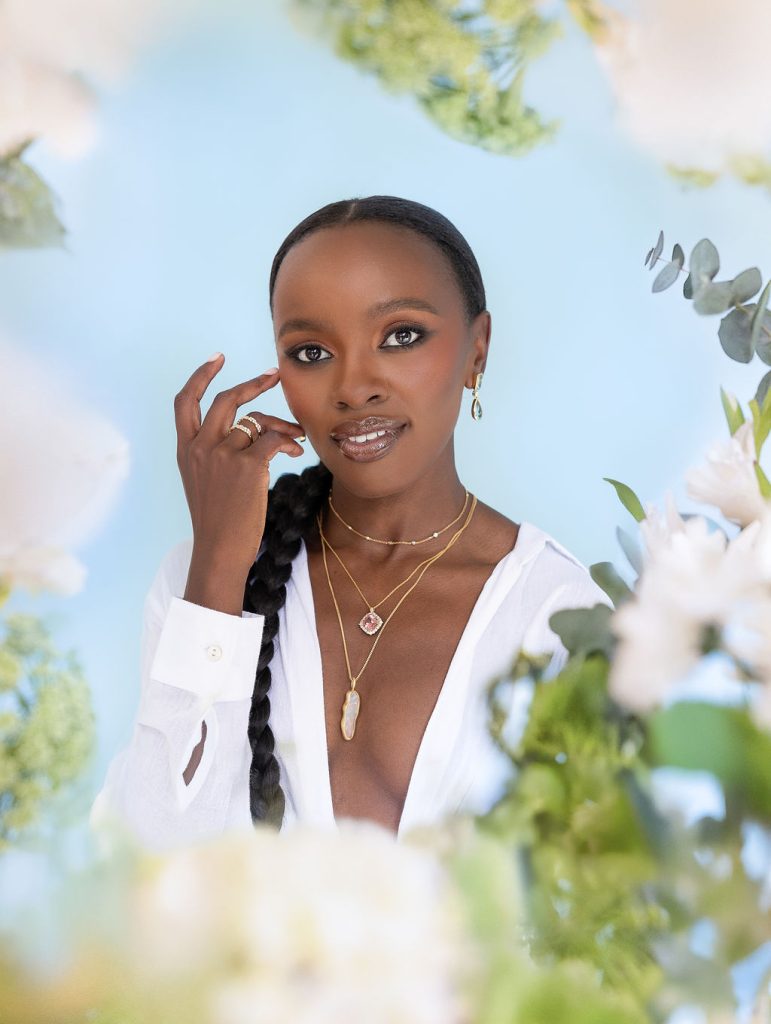
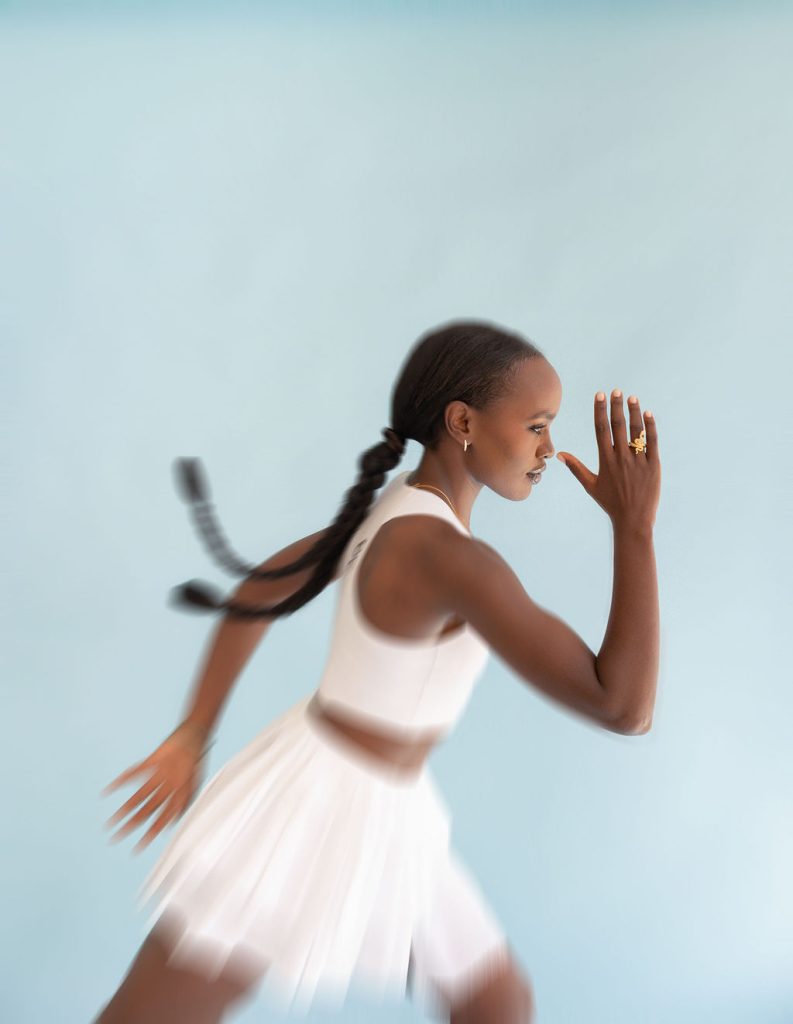
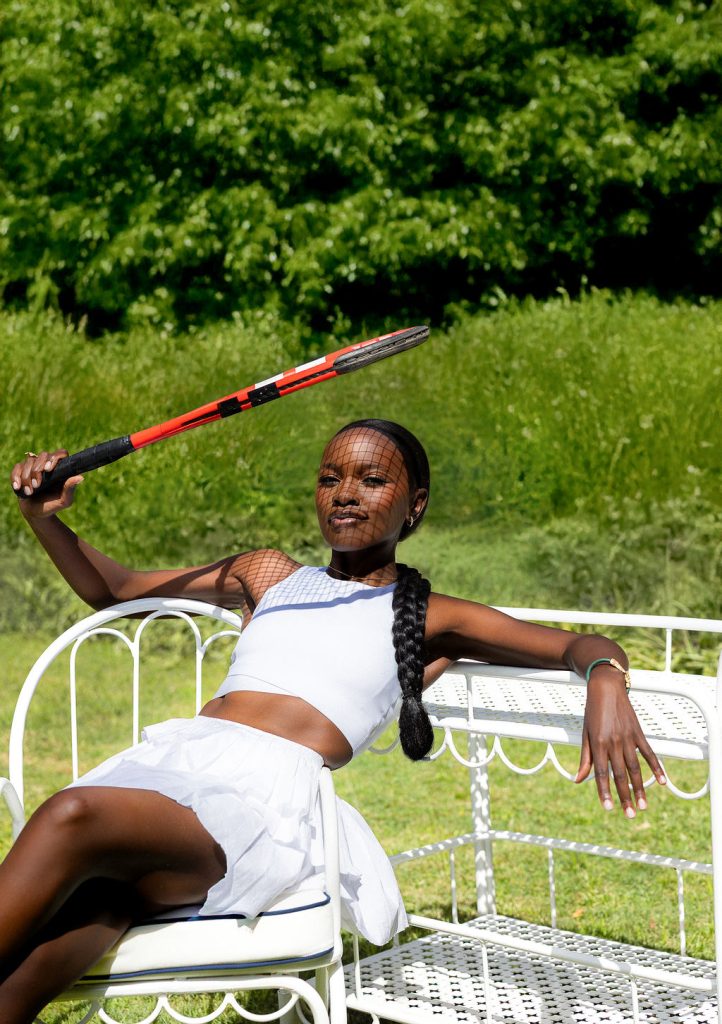
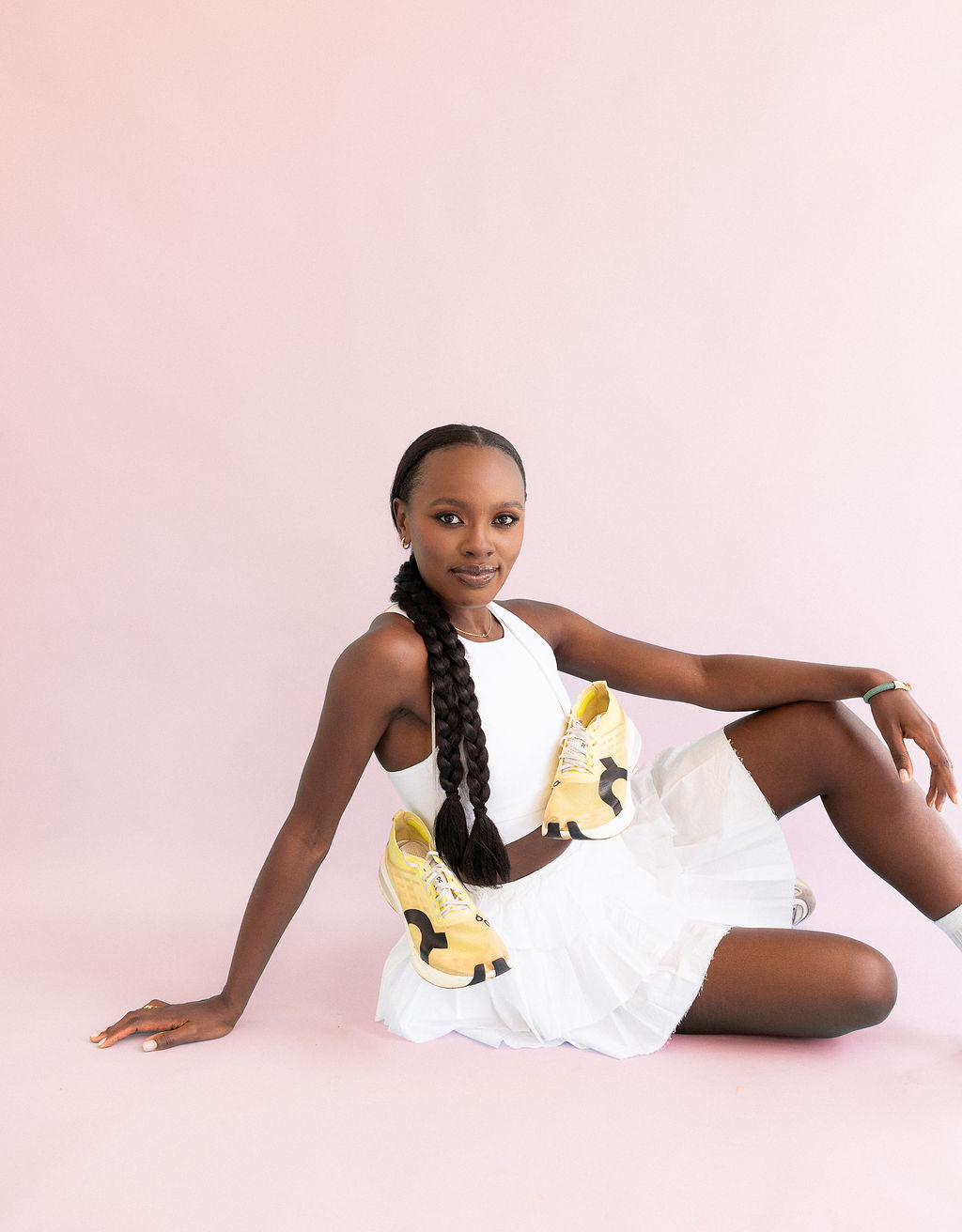
She is a 12-time marathoner, a two-time Boston qualifier, an international lawyer, and an ambassador for Swiss running brand On. She arrived at our shoot carrying a tennis outfit in one hand and a one-of-a-kind jewellery dress by Sharon Wendo in the other. That felt exactly right.

You grew up in Kapsabet – ground zero for Kenyan running royalty. And yet you’ve said running was never part of your childhood. What was your world as a girl growing up there, and what did sport mean – or not mean – to you back then?

I loved growing up in Kapsabet! Especially now, as an adult, living in the beautiful chaos of Nairobi, I look back on it so fondly. What I remember most is how quiet and wholesome the community was. There was always someone’s cow that had just given birth and they’d bring over fresh milk, neighbours with an extra harvest bringing around vegetables. Looking back, it feels so romantic

But of course, when you’re a child, you’re not conscious of any of that. You know nothing else, that’s the only version of life you think there is. Now it sounds so idyllic. I’m incredibly grateful that I grew up that way.

Strangely, I don’t remember seeing anyone running in Kapsabet. As an adult, I realise that’s because we were on completely different schedules. The runners would have finished their training long before the rest of us were waking up. Like most Kenyans, I knew running through television, whenever Kenya had a big moment on the world stage. It never occurred to me that I was growing up in the very place where so much of that history was being written.

Alliance Girls High School is one of the most academically competitive schools in Kenya. Was the version of success being modelled for you there – excellence through the mind, through the law – something you embraced, or something you eventually had to escape?

No, I loved school. I was good at it from an early age, so I thrived in the rigorous academic system that Kenya is so famously obsessed with (laughs). I embraced that path completely.

Education opened every meaningful door in my life. and I don’t think 1 ever felt the need to escape it. If anything, my years at Alhance reinforced that belief. It was an incredibly intense environment, but there was also something very powerful about being told every day at the morning parade that you were the best and were capable only of great things.

I know Alliance folk have a reputation for talking about Alliance a little too much, and that reputation is deserved (laughs), but I genuinely value what the school gave me. It instilled confidence, ambition, discipline. and a sense that there shouldn’t be limits on what you could aspire to.

So the Alliance-to-law-school pipeline was never something imposed on me. It was a path I genuinely chose for myself and one I was excited about. Life has taken a few unexpected turns, and today I spend less time practising law than I once imagined. But it remains a huge part of who I am, and I fully intend to find my way back to it.

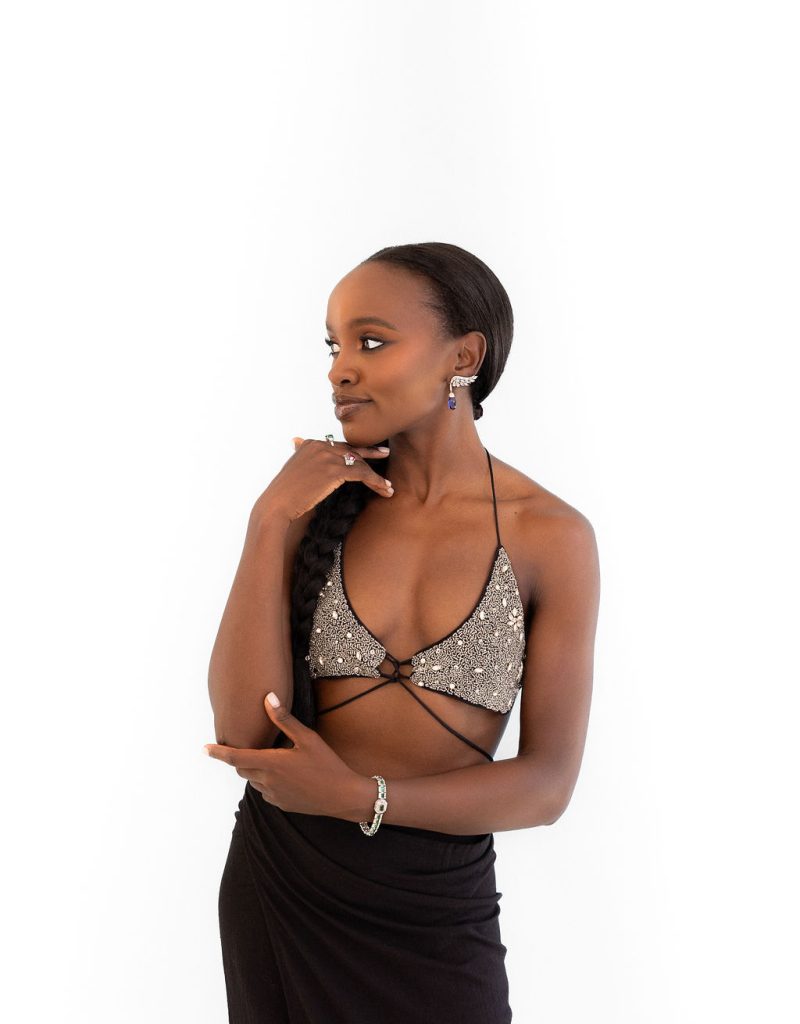
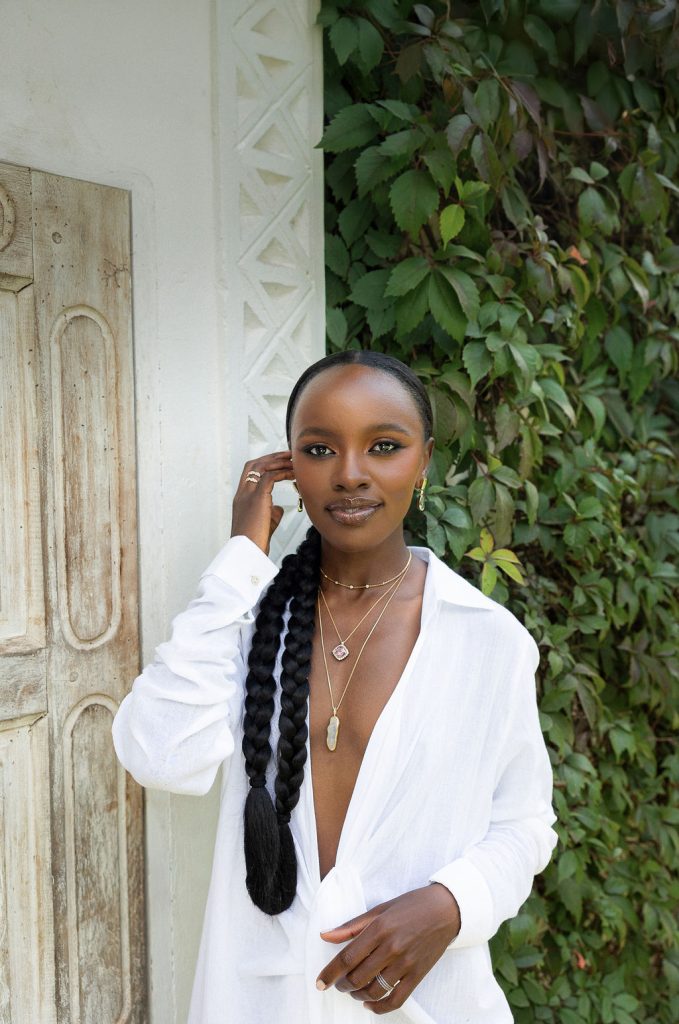
Emily wears the Oasis Bralette by Amani Yani. Jewellery by Rosenkrantz.

You lived in the States, South Africa, Italy and England before returning to Kenya in 2018. Who did you become in those years abroad – and who did you have to leave behind when you came back?

Ouf, that’s a loaded question.

I don’t think there’s anything quite like moving abroad at eighteen. You’re still in such formative years, you’re malleable, receptive, open to everything. It was one of the best things I did I believe. And once you’ve done it that young, you realise you can do it again and again, anywhere in the world. Your brain learns to navigate new systems, customs and ways of life, before packing everything up and starting again somewhere else.

Eventually, you stop measuring every place against the one you left behind. You simply learn to belong wherever you are.

I think it made me open-minded. It made me comfortable with discomfort. It taught me how to find my feet in unfamiliar places, and that’s a skill I’ve carried into every part of my life.

Being away constantly is also what made me actively choose to stay put for a while. I’ll quote this line from TS. Eliot that I like-

“We shall not cease from exploration, and the end of all our exploring will be to arrive where we started. And know the place for the first time.”

At some point, I just felt super in love with Nairobi. As I got older, I stopped looking at Kenya through a Western lens. I stopped comparing, stopped measuring everything against somewhere else, and began appreciating the country on its own terms. The quirks became endearing, The chaos became part of the charm. Whatever infrastructure we have, we have. Whatever challenges exist, they exist. And so much life, optimism and possibility here.

Like many things, it was leaving that made me appreciate us, “see us for the first time”.

You’ve described running as something you picked up as an adult. What was the actual moment? Was there a day you remember clearly – a mirror, a feeling, a conversation – when you decided: this changes now?

Oh yes, it started in 2015. I began dating someone who was training for an Ironman, and I started running so we could spend time together and I could tag along on his training. I didn’t even have proper running shoes.

3 weeks later we entered and raced a half marathon together and I did well enough that it triggered entry into a full marathon immediately after. Eleven years down the line and here we are. I owe him a lot for that introduction into the sport.

Be honest with us – are you an introvert or an extrovert?

The annoying answer is that I don’t know. I love solitude. My favourite things to do tend to be solo and time-consuming (laughs). Long runs, big books, tennis (I guess in the sense that it’s not a team sport)— so I would love to formally identify as an introvert. But you probably don’t build a community of thousands without genuinely loving to be around others and being absolutely comfortable to share very intimate moments in life with strangers, so I think there’s a balance of both.

“There are so many moments where I’ve stood there, looking around at the hundreds of people gathered so early in the morning and thought, how on earth did this happen?”

There’s a Forrest Gump quality to your story – a person who one day simply starts running, keeps going. and somehow the world follows. Do you ever look at what you’ve built and think, I had no idea what / was doing, and does that terrify you or delight you?

Gosh, all the time.

There was no grand strategy behind We Run Nairobi. Not a single one. There are so many moments where I’ve stood there, looking around at the hundreds of people gathered so early in the morning, which is massive for Nairobi standards, and thought, how on earth did this happen!

But I find it deeply moving. Communities are living things. They grow because people contribute to them. One person shows up, then another, creating a ripple effect: a circle of people choosing, again and again, to be part of something bigger than themselves. That never stops moving me. I think it will be the best thing I’ve ever been part of.

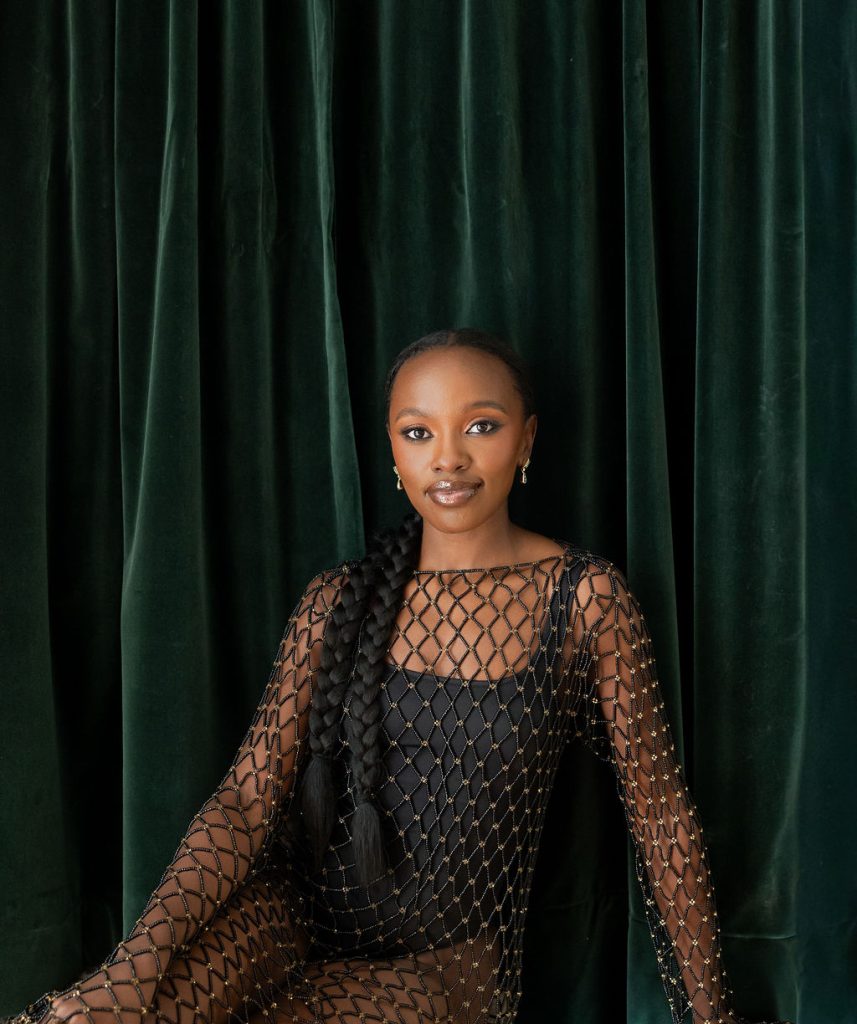
Emily wears the Dawa Long Dress by Amani Yani. Jewellery by Rosenkrantz.

Four women. A six-kilometre loop. Coffee afterwards. That was it – that was the beginning. Did that first Saturday feel like anything, or did the significance only arrive much later?

Yes, I loved that day!

There had been no strategy beforehand. No trial run, no rehearsal, no thought given to how I would manage people of different paces or abilities when only I knew the route (laughs). We figured everything out in real time, and I remember it so fondly.

Even staying for coffee afterwards felt completely untested. What would we even talk about? But we figured that out too.

I went home ecstatic. It had worked. From then on, it never mattered whether it was just me and one other person, ten of us, or now hundreds. The number has never mattered as much as the moment itself. That at least one person finds a sense of belonging,  meets a new running partner, or, most importantly. discovers the sport for the first time. That has made it special from the very first Saturday.

We Run Nairobi is free. Beginner friendly. Open to everyone. In a city where fitness spaces are often coded as elite, expensive, or intimidating – what was the deliberate thinking behind making this radically accessible?

Because I wanted to remove as many barriers as possible. Running is one of the most democratic sports in the world. All you really need is a pair of shoes and somewhere to move. Wherever I’ve lived, a running club has been the first community I found and joined. They were always free. We Run Nairobi had to be free too.

Then there are the economic realities of Nairobi. I didn’t want cost to become the reason someone couldn’t participate, just as I didn’t want experience to become the reason someone felt unwelcome. So it had to be free, and it had to be walking-friendly too. No registration. No administrative process. The vision was simple: if someone wants to come, they should be able to make that decision at any moment and simply show up.

You’ve said the best part of the community is how natural it feels, and that you don’t want to mess it up by growing too fast. In a world obsessed with scale, reach, and metrics – how do you hold that line?

Great question! I remind myself constantly what people are actually coming for. They’re not coming because we’re the biggest. They’re coming because of how they feel in that space. Hopefully seen, welcomed and met with camaraderie.

Growth is wonderful, but not if it comes at the expense of the culture that made people fall in love with the community in the first place. So every decision gets filtered through that lens.

Kenya is synonymous with elite running – Kipchoge, Kipyegon, Chebet. And jet everyday Kenyans, especially women, had no entry point into that identity. How did We Run Nairobi become the bridge between world-record running and the rest of us?

Yes! Kenya has always been synonymous with running For decades, that’s what the world knew us for-running and safaris. But for the longest time, that culture was confined to lten, the mecca of professional athletes. Spotting a casual runner on a Tuesday morning in Nairobi used to be so rare that whenever it happened, I’d wave maniacally across the street at them.

That is exactly what we changed. We ushered in a space for the everyday, mortal runner.

Before We Run Nairobi, long-distance and marathon clubs existed, but there was nothing for the casual, slower, shorter distances-or even for those who just wanted to walk. It was crucial to me that this community spoke to the absolute beginner. I didn’t design it for people like me who had been in the sport for years; I designed it for someone entirely new to it. Someone who would show up for the community first, come out for a walk, and discover the running later.

The growth has been incredible. Seeing so many similar communities popping up now is fantastic! In fact, I have friends in Iten who are elite professional runners, and it absolutely blows their minds when they hear the casual paces we are running at (laughs). We’ve democratised running in the city, making it accessible, social, and fun.

Emily arrived to the Luxury Life Kenya shoot having pulled a one-of-a-kind jewellery dress by Nairobi designer, Sharon Wendo - founder of Epica Jewellery, whose bold African beadwork has been worn from Nairobi to London Fashion Week - directly from her personal wardrobe. She also brought a tennis outfit. The story was right there in the bag.

Your work with the Rockefeller Foundation takes the ethos of We Run Nairobi – inclusion, access, community – and applies it on a much larger canvas. How does that partnership allow you to think about sport and wellness not just as personal pursuits, but as tools for social transformation?

What excites me most is that opportunities like these come from the proof of concept that We Run Nairobi has created. They show that grassroots movements can be powerful tools for social cohesion and, perhaps, catalysts for broader change.

At some point, we move from viewing sport and wellness as individual privileges or isolated health choices, and start addressing them as critical infrastructure for public health, urban resilience, and social equity. It shifts the conversation from “how do we get individuals to move?* to “how do we design cities and systems that actively foster inclusion, safety, and community well-being?

When communities have access to safe public spaces, when wellbeing becomes accessible, the effects ripple far beyond sport. That’s where things become really interesting. 

There is growing global evidence that access to green space, safe streets, and fitness infrastructure is profoundly unequal. When you run through Nairobi’s neighbourhoods, what do you see – and what do you want to change?

It’s true. That is the reality of Nairobi. Some neighbourhoods have safe, accessible spaces to walk, run, and cycle, while others simply don’t. That imbalance is real.

But even without building new parks, stadiums, or entirely new infrastructure, although of course that should still be part of the long-term vision, there is already so much opportunity to work with what exists. The first is road culture. I think something powerful happens when running becomes so common and you see someone out running all the time. That visibility slowly shifts behaviour. It changes how drivers relate to pedestrians and runners. It encourages small but important acts of respect, giving space on the road, slowing down, acknowledging that people are sharing the same environment. 

I also hope it leads to something culturally deeper.

Where women can run without being shouted at or made to feel out of place, and where people are not mocked for choosing to move their bodies in public Those shifts in everyday behaviour would go a very long way.

The second is how we can creatively use the infrastructure we already have. I often think about an experience I had in Kigal, where on a Sunday a main street in the city was cordoned off so people could freely run and walk without traffic. It didn’t require building anything new; it was simply a reimagining of what that space could be for a few hours.

Something like that, even if it’s just one street per neighbourhood on a designated morning, would completely change how people experience movement in the city. It would signal that public space belongs, at least in part, to the people using it.

To me, that is really the shift: not always building more. but learning to share what we already have better.

The law gave you a particular lens – rights, equity. systems. Does the lawyer in you ever get frustrated at how slowly structural change moves when you can see so clearly what needs to happen?

Gosh, no. One of the things you learn very early on in a legal career is how slowly things move. When you’re young and your reference is glamorous TV shows, you think everything happens so fast and that there’s always a dramatic clincher, but no, as with everything, it takes time.

The challenge is balancing urgency with realism.

Change rarely happens overnight. Most meaningful progress comes from sustained effort over long periods. But again, we don’t need the time to build new systems. Small, low-effort changes can already impact so much.

You’ve built your credibility on showing up – every Saturday, without exception. Is that the most underrated lesson in community-building? That there is no substitute for consistency?

Without question.

Consistency sounds boring until you realise just how powerful it is. One of the most common things I hear from people attending their first We Run Nairobi event is, “I’ve been meaning to come for months.” Sometimes it’s six months, sometimes a year.

And my response is always the same: that’s completely fine. Don’t force it. Life happens. But whenever the timing feels right, know that we’ll be here.

I love that’s become our brand promise. Consistency. Rain or shine, holiday or not, whether there are ten people or five hundred, we’ll be there.

I think people often underestimate how much trust is built that way. People don’t build trust because you show up once. They build trust because you show up again and again and again. Eventually, reliability becomes credibility.

And when you’re building a community, especially one that isn’t selling a product or driven by capital, trust is your most valuable currency. People are investing their time, their energy, their Saturday mornings, and often a little bit of vulnerability when they show up for the first time.

Most communities aren’t built through grand gestures. They’re built through hundreds of ordinary days where people keep their word. That’s what consistency is. Not excitement, but commitment.

“When communities have access to safe public spaces, when wellbeing becomes accessible, the effects ripple far beyond sport.”

You’ve described your Instagram bio as someone who “dabbles as a lawyer.” Is that wit, or has running quietly become the fuller, truer vocation?

(Laughs.) Yes, it has, for now. I describe myself as being on a short sabbatical from legal practice. The goal is to make a sustainable business case for We Run Nairobi, so that one day it can be passed on to its next visionary leader. But I was never trying to run away from a legal career. I love the profession.

The law demands evidence, argument, restraint. Running demands surrender – trust in the body, endurance through discomfort. Is there a version of you that only exists at the intersection of those two things?

That’s interesting; I’ve never really juxtaposed the two in that way.

I’ve actually always thought law and running have more in common than people might assume. At their core, both require an enormous amount of resilience. Law school was intense. It was its own kind of endurance sport; years of sustained effort and delayed gratification In that sense, marathon training never felt entirely unfamiliar. 

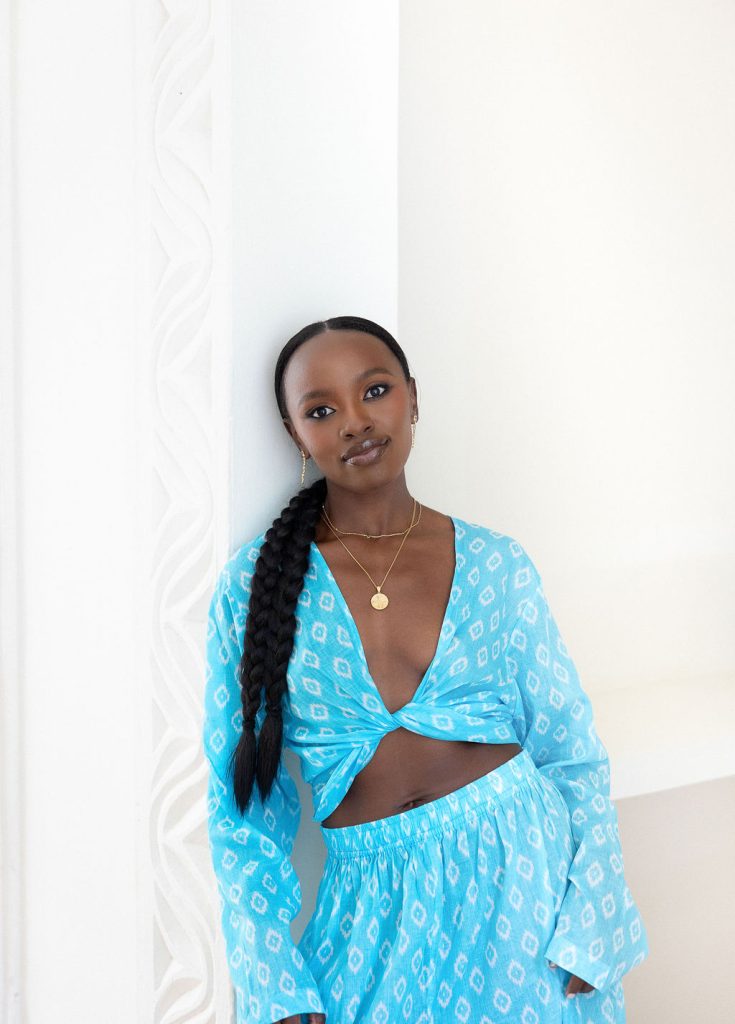
Emily wears 100% mulmul cotton beachwear set by Amani Yani. Jewellery by Rosenkrantz.

To me, running is also deeply rooted in preparation and decision-making. By the time you stand on a marathon start line, the first question has already been answered.

Can I physically cover this distance? The training has taken care of that. So what remains is the mental side of the equation.

Can I stay composed when things get difficult? Can I trust my preparation? Do I know when to push and when to hold back? Do I have the confidence to attack when I’m feeling strong and the discipline not to panic when I’m not? Those are all forms of control.

In fact, some of the hardest moments in running aren’t physical at all. They’re psychological. The body is often capable of more than the mind initially believes. As long as the mind is still engaged, you’re still making choices. You can adapt, you can respond, you can persevere.

Perhaps the intersection of law and running is where I learned endurance. It’s where I learned that progress takes time, difficult things are usually worth doing, and resilience is often about staying in the game long enough for things to work out.

Boston is the marathon that asks you to earn your entry – no money, no connections, just time. You’ve qualified twice. What does Boston mean to you as a metaphor, not just a race?

Oh my gosh, everything. And the funny thing is, I didn’t realise how much Boston meant to me until I actually ran it. I learnt about the World Marathon Majors relatively late in my running journey, but once I discovered them, they became the goal. I loved that there was something concrete to chase. They were only six, there a finite finish line. So I told myself that I’d complete the six and wrap up the marathon era of my life.

Now the challenge with most of the majors is that they’re all lottery systems. You can train hard, you can want it desperately, and still not get in. Boston was different. Boston gave you agency. It said, “If you can run this time, you’ve earned your place.” I found that incredibly compelling. 

So began the quest. I did the best marathon training I’ve ever done. Everything aligned around that goal And then came the qualifying race in Vienna It was one of those magical days athletes talk about. I felt like the wind was at my back, the ground was rising to meet my feet, everything just clicked And I qualified by a massive margin. Ah! What a feeling! It remains one of the best days of my life, and that’s not much of an exaggeration. 

Then I got to Boston. And Boston is magic. There’s something profoundly moving about standing on a start line surrounded by thousands of people who all earned their place there. Nobody stumbled into that race by accident. Everybody worked so hard for it. The atmosphere is unlike anything I’ve experienced in running.

But what I didn’t expect was what came afterwards.

Once I’d achieved that goal, a lot of the motivation that had driven my marathon running simply disappeared. Qualifying for Boston is so difficult, and many incredibly talented runners never get there. I felt immense gratitude for having done it. And, somehow, I also felt I was done. For the first time, I wasn’t interested in signing up for the next race.

And that’s where We Run Nairobi was born.

I realised I still wanted running in my life, but I wanted my relationship with it to evolve. I wanted to share it. I wanted to create opportunities for other people to discover what the sport had given me. I wanted my contribution to running to become something bigger than my own finish times.

As a metaphor, Boston represents both earning an opportunity and recognising when a goal has changed you enough that the next chapter requires a different dream. Without Boston, there is a very good chance there would be no We Run Nairobi.

On is a Swiss brand built on the idea that running should feel like floating – technical, rigorous, and almost philosophical about performance. What about their vision felt like yours, and what does it mean to carry their name on the African continent?

Everything! Every time I read On’s mission, “to ignite the human spirit through movement”, I get chills because it so perfectly captures what we were trying to build with We Run Nairobi before there was ever a partnership.

At its heart, that’s always been the goal, movement, through a people-first approach.

I know the feeling at the end of a good run, that sense of accomplishment and joy that makes you wonder why you ever didn’t want to go. But I also know the feeling in the middle, when it’s uncomfortable, when your legs are heavy, when you’d rather stop.

The reality is that most of sport happens in that middle section.

Nairobi isn’t naturally a running city. We couldn’t simply show people footage of runners and expect them to be inspired. We understood that if we wanted more people to move, they first had to see themselves reflected in the space. The people stories had to come before performance.

Faith and Betty, who lead our storytelling, understand this beautifully: If you look at our content, it’s far more about the people than it is about the running itself. You’ll feel the friendships, the conversations, the first-timers, the milestones. The running is there, of course, but it’s almost secondary.

Because what draws people in is recognising themselves in someone else’s story. What movement gives us individually is that feeling at the finish line. What community gives us is the knowledge that everyone around us experienced the difficult middle too. We struggled together, persevered together, and ultimately triumphed together.

That’s what resonates so deeply with me about On. Their vision understands that movement isn’t just physical. It’s emotional, social and deeply human. So carrying their name on the continent means so much to me. I hope that’s what we’ve created with We Run Nairobi: a gathering that’s about movement, but also about so much more.

You came to this shoot with two looks from your own wardrobe: a jewellery dress by Sharon Wendo and a tennis outfit. That tells us everything and nothing at the same time. Walk us through both choices – what were you thinking?

I actually love to put together an outfit!

I only started creating content around my life about a year ago, so I think most people who know me now associate me with running, sports, and We Run Nairobi. And that’s very accurate. But long before that, I loved putting together an outfit. Fashion has always been something 1 enjoyed, and lately I’ve been leaning back into that side of myself.

The Sharon Wendo piece is the perfect way to stake your claim as a fashion girl (laughs). I met Sharon through We Run Nairobi, which feels wonderfully full circle. She’s an incredibly talented designer, and that body jewellery dress is bold. It definitely does not sit on the fence. The moment you put it on, you’re making a statement. I love that kind of confidence in design. It asks you to be a little brave, and I think fashion is often at its most interesting when it does.

The tennis outfit was a complete no-brainer.

If I’m being completely honest, tennis fashion probably played a good role in my taking up the sport (laughs). There is something so timeless about a tennis outfit. It’s athletic without feeling overly technical, polished without trying too hard. You can leave the court and head straight to lunch. And in many ways, that’s exactly how I see my life.

I felt that the two looks captured me quite well. One was fashion-forward and daring, the other was sporty and effortless. A lot of grit, with a healthy amount of glam.

The legal profession prescribed your wardrobe for years – blacks, greys, the navy blues of professional respectability. When you shed that uniform, what did you reach for first?

I think it’s infiltrated my system. I really love a nice clean line in design (laughs). But more than that it’s colour. Someone has got to stop me from buying any more reds.

We are watching a generation – Gen Z especially – who are choosing fitness, mental health, and wellness with a seriousness that previous generations reserved for career or wealth. You see this on the streets of Nairobi every Saturday morning. Is that shift real to you – and what is driving it?

It really is incredible. When I learn the ages of some of the people at We Run Nairobi, I’m genuinely shocked. My friend Brian, who just turned 18, I don’t even know if we can fully call him Gen Z, just ran his second marathon this weekend. His second!

There used to be a running joke when Gen Z were just coming of age and entering the workforce, that they’d quit the moment they felt “unrelaxed”. We used to laugh at that. But now I understand what people were pointing to. There is a visible shift in mindset between millennials and Gen Z and how seriously wellness is taken.

Wellness is such a priority. And I think it would be very misguided to interpret that as youthful apathy. because what I actually see are people showing up consistently, training for big goals, signing up for races, and committing themselves to very real, very difficult physical challenges. That grit translates elsewhere in life. Priorities are just different.

This issue is built on a provocation: sport is the new luxury. Do you agree – and if so, what makes movement a luxury in 2025? Is it time? Access? Community? The fact that Nairobi’s streets are nose full of people in On shoes at 6am on a Saturday?

(laughs) First of all. I’m very pleased if the streets are now full of people in On shoes at bam on a Saturday (let’s go team On!).

But I think I have a slightly boring answer to this one. The luxury is having the time, the safe spaces to move in, good health, and a community to move with. I honestly don’t think you can have all of that and not feel incredibly fortunate.

Of course, as with anything that becomes more visible and culturally significant, there is a tendency for hierarchy to emerge. You start to see markers of status within it; the premium gyms, the expensive trainers, the gear, even race entry fees that can become exclusionary.

But at its core, movement doesn’t need to be complicated. It can be incredibly simple and still deeply meaningful. And maybe that’s the tension; between something that is fundamentally free and human, and the ways in which it sometimes gets packaged into something else. Both can exist at once, but I always come back to the simplicity of it.

“Consistency sounds boring until you realise how powerful it is.”

If the 21-year-old Emily – pre-running, pre-movement, pre-any-of-this – could see this cover, what would she think?

First of all she would scream, in absolute disbelief!

She’d be completely confused. None of this was part of the plan. And I hope she’d be proud that she stayed open to possibilities she couldn’t yet see.

Running on Sound Every serious runner has a relationship with music – or a deliberate decision to run without it. Emily’s answer, we suspect, says everything about how she moves through the world.

Do you run with music, a podcast, or silence • and what does your answer say about the kind of runner you are? Take us through your current playlist: the track that gets you out of the door on a morning when you don’t want to go, the song that carries you through the wall at kilometre 30, and the one that plays when you cross the finish line.

I actually don’t run with music. It started as a road safety thing, because I run on the streets in Nairobi where traffic can be quite unpredictable; it just wasn’t a safe option.

But overtime, especially on races, it became something more intentional. My biggest mental training is trusting that whatever I need, I can access it internally. And honestly, my greatest fear is having Beyoncé blasting in my ear at kilometre 30 and realising that even Beyoncé cannot save me in that moment. The horror. So I run without music. 

For my everyday runs, the early mornings are one of the few times in my day when nobody needs anything from me. It’s one of the few quiet spaces in my day where nobody needs anything from me. I can detach, think, and sometimes solve problems I didn’t even know I was carrying.

That said, every runner has their emergency soundtrack.

The song that gets me out the door on days when motivation is low is usually a rotating cast of millennial pop classics; Beyoncé, Rihanna, Adele, Taylor Swift. Sometimes Eminem. It depends on the emotional negotiation happening that morning.

I like musicals. Lolz. At kilometre 30, I might put on The Lion King from start to finish, because at that point nothing external is really going to rescue you except your own decision to keep going. So you might as well relieve the suffering of Mufasa and gently unfocus for a little while.

The finish-line, however, has no song. To hear the sound of the crowd from 500 metres out is one of the most energising things in the world; it still gives me chills thinking about it. And if you’re lucky, there’s a friend at the finish line screaming your name; someone who has followed the journey, tracked your splits, knows exactly when you went out too fast, when you faded, and has fought their way to the front just to be there in that moment.

I can never quite put into words the value of that. In a stadium full of strangers, to hear that one familiar voice means everything. □


MUST READ