Search Luxury Life Kenya

Generic selectors
Exact matches only
Search in title
Search in content
Post Type Selectors
Kwetu Nairobi, Curio Collection By Hilton
Experiences & Travel

Kwetu Nairobi, Curio Collection By Hilton

Behind the Scenes of Quiet Luxury


Change can come in small ways.” The words Shreeti Patel shared with us to describe Nairobi’s most culturally ambitious hotel.

Kwetu Nairobi, Curio Collection by Hilton, is a modernist architectural marvel along the forested Peponi Road in Nairobi. At the time of printing, it had been featured in Forbes and Time Magazine, with the latter even naming it one of the “World’s Greatest Places 2024.” Both magazines highlight the esoteric restaurants woven into the fabric of its five blocks, the unique pool, and the calming interior design. The building’s beauty is breathtaking. But when we sat down with the minds behind the hotel, we discovered that its form exists as it does to complement its primary function: marking the entire history and evolution of Nairobi.

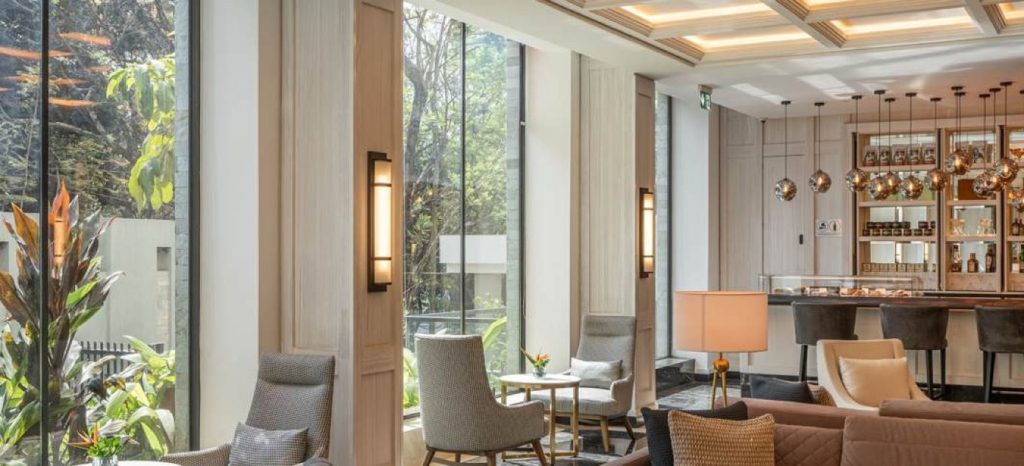
Through the time machine of poetic licence, a walk through Kwetu Nairobi’s five blocks can become a sightseeing tour of a day in Nairobi— spanning 130 years. From the entrance, you are welcomed by the first block, Rafiki, where guests are greeted as friends by the aromas of 1893 Brew Bar, one of the hotel’s five restaurants.    Running through the spine of the complex is a walkway that winds up the five-building structure, evoking a strangely familiar feeling. As if you have been here before. As if, somehow, this hotel has always been a part of your life.

Yet the idea for this hotel only dates back to 2017. After years of running English Press, a landmark Kenyan printing organisation that’s nearly 80 years old, Kalpan Patel decided to challenge himself in the hospitality industry. Through a series of partnerships, the groundwork for a hotel was laid. But at first, it was simply just that—a hotel.

Hilton executives approached Mr Patel with the prospect of a DoubleTree. An offer he wisely declined. After several visits by Hilton’s Managing Director for Africa and the Middle East, the proposal was revised and upgraded to the prestigious Curio Collection. That was finally up to Mr Patel’s speed.

Kwetu Nairobi emerged at a time when Mr Patel found the region’s then-upcoming major hotels uninspiring. It was conceived to shake up that landscape—to offer guests a sense of belonging. To create an atmosphere and experience that reflect a deep passion for Kenya.

Unlike other hotels with Kiswahili names chosen for aesthetic appeal without thematic relevance, Kwetu Nairobi was not just a name. It was not meant to merely mean something—it was meant to tell something.

A story. 1893 Brew Bar, for instance, is likely to be seen stamped on environmentally friendly coffee cups carried by guests through the halls of the hotel. Located at the reception near the entrance, 1893 is more than just a café. The name itself is steeped in history—1893 was the year colonial settlers officially reaped their first successful coffee plantation in Kenya, marking the beginning of a golden Kenyan era.

Soon, with coffee established as a cash crop and the newly formed railway station providing a means of transport, the pull toward Nairobi became irresistible. Before long, coffee farms spread into and around Karura Forest, where Kwetu Nairobi stands today.

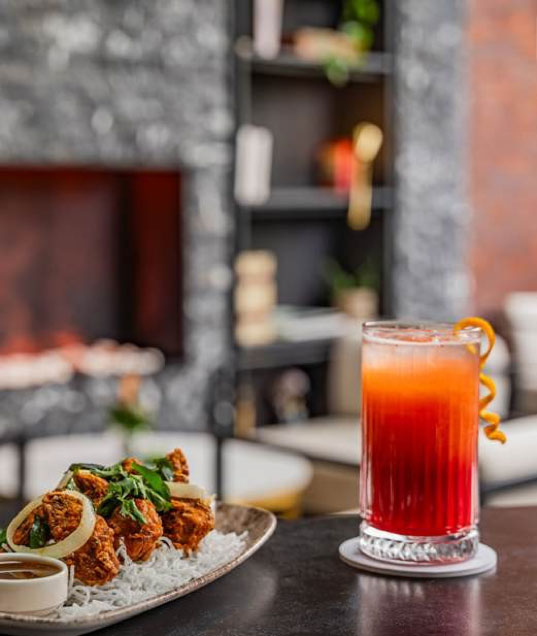
Kwetu Nairobi is designed to feel personal, as if the property belongs to you. Specific design choices were made from a singular perspective rather than by committee—only such a vision could determine that above the intimate cocktail bar, Zabe, there had to be an Asian-fusion restaurant named Upepo.

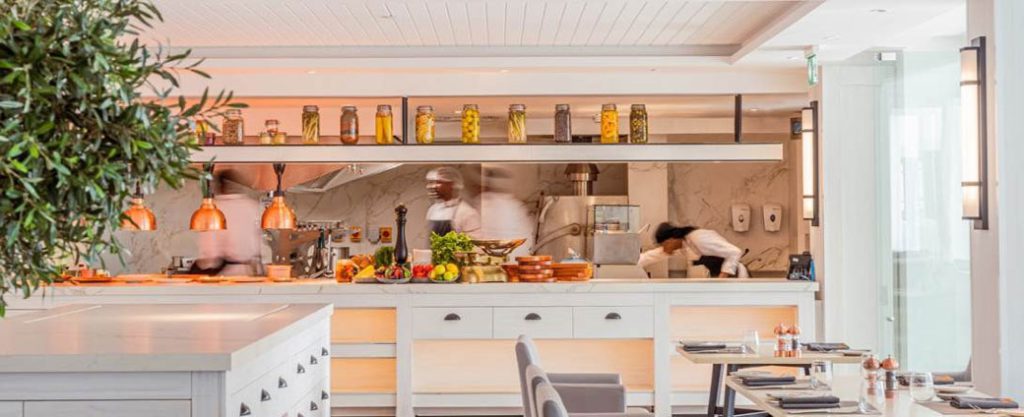
The entire hotel fosters a sense of belonging— not just for the guest but for the hotel itself on the land it occupies. It subtly weaves cultural elements into its identity, making it feel rooted in its setting. Meko, another of the hotel’s restaurants, takes its name from the Kiswahili word for “kitchen.” As you walk through the space, a floating island runs along its spine, punctuated with olive trees illuminated from below. For a local guest, the open structure is instantly familiar, evoking the ancient architectural style of coastal tribes.

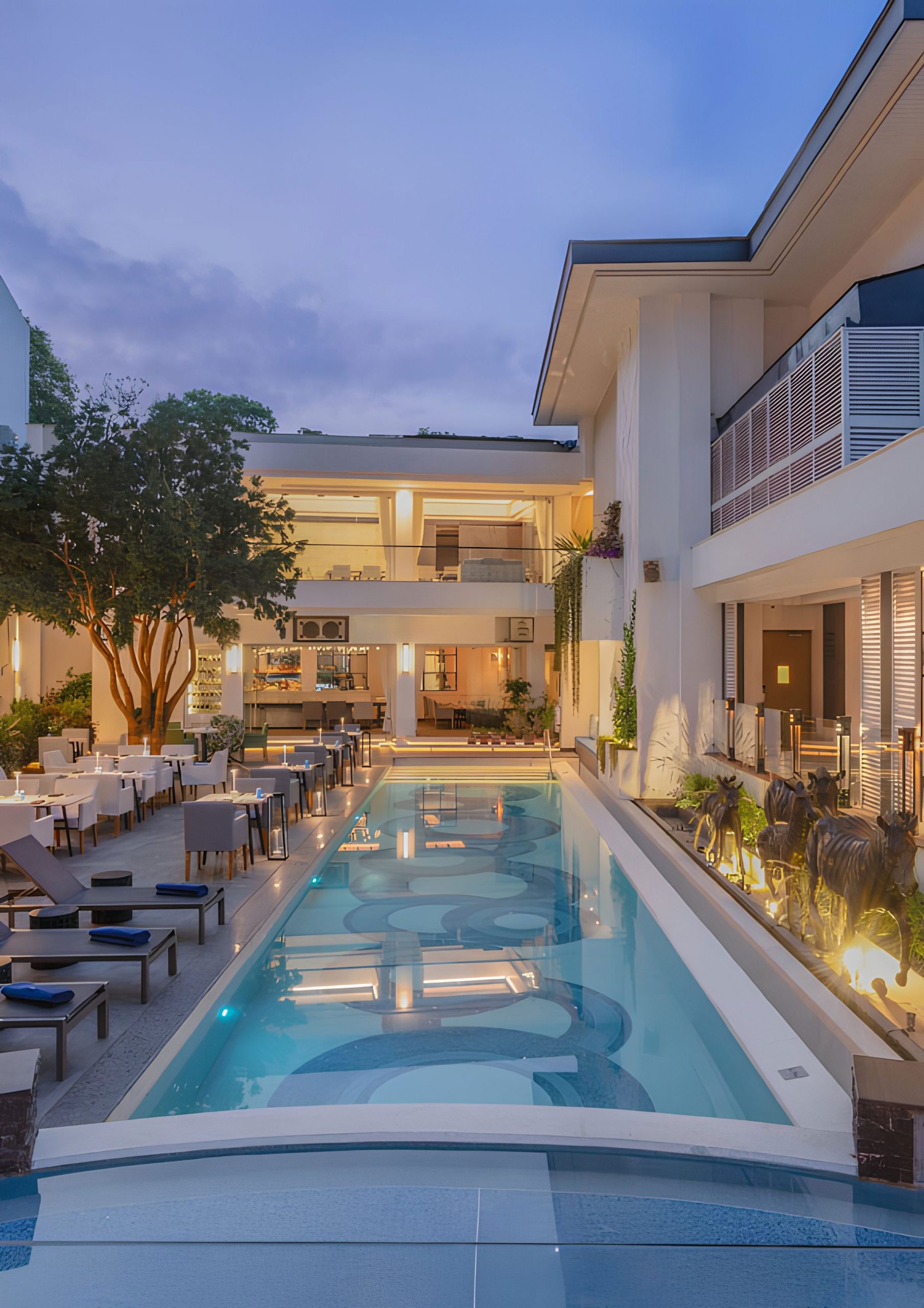
The art and cultural elements had to follow suit. Kwetu Nairobi couldn’t just have another ordinary pool. Instead, the pool features a locally sourced white terrazzo floor finish, embedded with fiber optic lights that mimic a starry reflection as evening falls. Just beyond the pool stands an acacia tree, evoking the sensation of swimming under the stars in Kenya’s arid landscapes and secluded oases, like those along the northern coast. It’s a fitting touch, as Mr. Patel first encountered the terrazzo- floor pool design during a vacation in Kilifi.

“Kwetu Nairobi serves as a portal to both the past and the future — a building with a sense of purpose.”

The development of Kwetu Nairobi is a fascinating story in itself—one that could almost rival the grand narrative the hotel seeks to tell. However, Mr. Patel holds two moments especially dear. The first came during the initial planning stages when they discovered a 16-meter (five- floor) height difference between the entrance and exit. This presented a significant challenge, particularly in designing a continuous walkway that would seamlessly connect all the blocks. Since the penthouse, located on the fourth floor, required an undisturbed layout, the solution was to create a gently sloping ramp that adjusted its elevation as it passed through each block.

That small adjustment in the interior design gave the entire hotel the feel of a neighborhood—where even the places you don’t visit still feel inviting. Mr. Patel calls the conception of this idea “the magic moment.”

His second point of pride is the back of house, developed at the height of COVID-19 when global hygiene standards were rising. In the hospitality industry, the back of house refers to operational areas such as kitchens and staff facilities, typically hidden from guests. But in this new landscape, Kwetu Nairobi reimagined what a back of house could be. The result was a space so well-designed that they now allow travel agents and guests to take a peek—an unusual level of transparency in the industry. Being a global leader in this regard is something Kwetu Nairobi takes pride in.

Details like these are what make the hotel feel both lived-in and culturally forward-looking. As guests walk through the blocks, they encounter numerous custom-made elements—from the lavender scent that fills the lobbies to the coffee scrubs uniquely crafted for Kwetu Nairobi. Just like in one’s home neighborhood, guests feel surrounded by cultural nuances that exist only in this space.

The hotel’s art pieces are almost entirely locally sourced. A glance at any random wall might reveal work from one of Kenya’s most celebrated artists stationed at the Kuona Trust or a budding East African talent who has just moved to Kenya and is making a name for themselves from the streets of Diani. 

But the premium find is undoubtedly the photography of Mohammed Amin, layered throughout the hotel’s walls, offering a powerful visual narrative of Kenya’s history and evolution.

Mr. Patel explains that he formed a relationship with Mohammed Amin’s family while printing Amin’s biography at English Press. It was then that the family invited the hotel to explore the vast treasure trove of Amin’s work—photographs that chronicle Africa’s story through the defining moments of the 20th century.

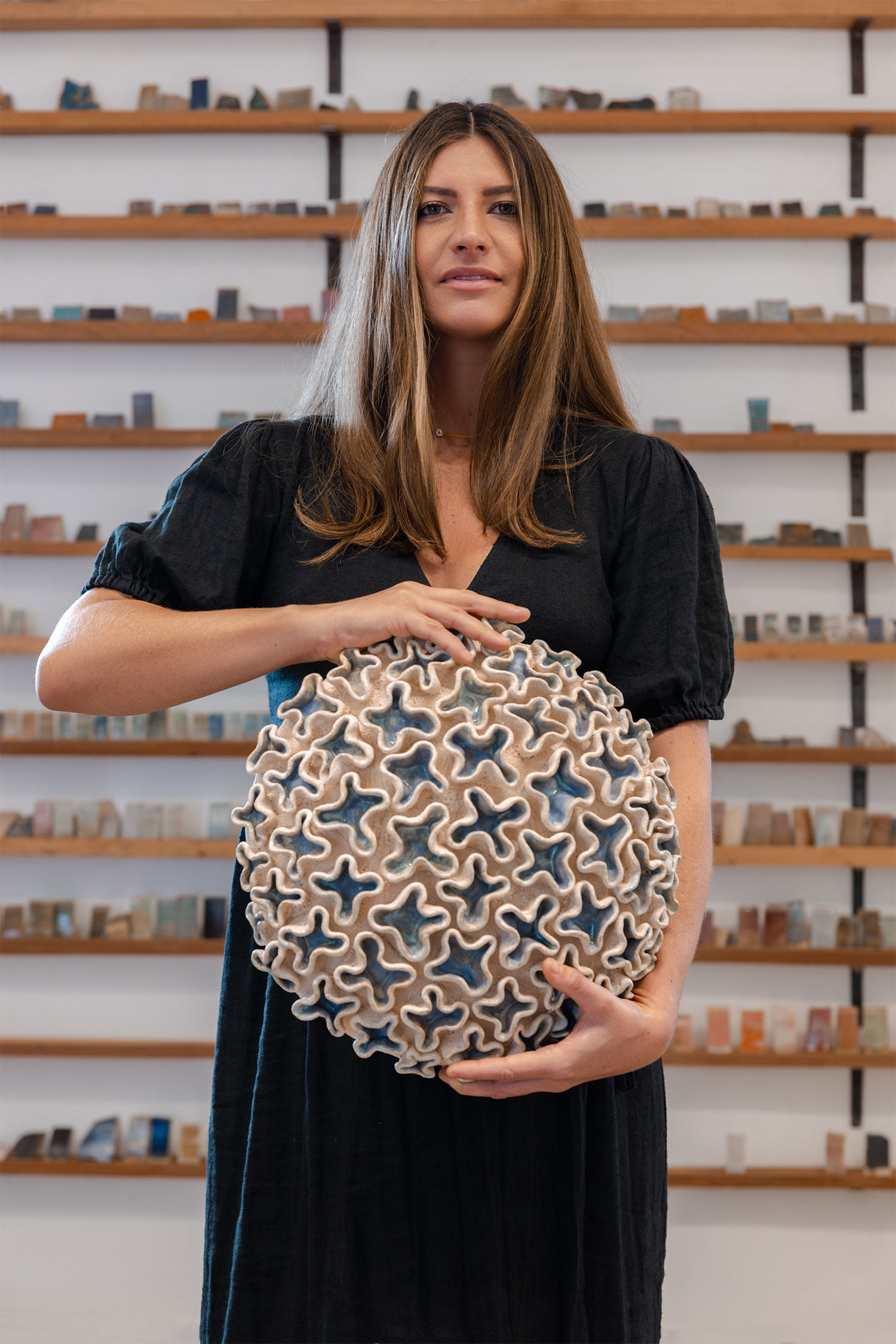
Shreeti Patel elaborated on how the artwork reflects the hotel’s commitment to engaging with the local community. She shared that they collaborate with emerging artists, paying them a licensing fee for their work. For many, having their art showcased at the Hilton is a significant milestone. Even the hotel’s pottery is locally sourced—from the same craftsman who made pots for the Patels’ first home back in 1996.

But of course, Kwetu Nairobi isn’t just trying to blend into its surroundings; it must also anticipate global trends and prepare for the gradual yet irreversible shift toward sustainable technology. In this regard, Kalpan is already ahead of the curve. The golf carts shuttling guests from their cars to the hotel blocks are electric.

The switches are digital, and an automated system with sensors adjusts the air conditioning to conserve energy when guests check out. The boilers run on LPG instead of diesel, and wastewater is recycled for cleaning and irrigation.

All 102 rooms are maintained remotely by an engineer stationed in another part of the hotel— through a system that is continually refined.

Kwetu Nairobi is committed to achieving net- zero status through various conservation and recycling initiatives. Its next major milestone is obtaining certification from the Green Building Association.

At its core, Kwetu Nairobi wants guests to leave with a deeper understanding of culture—the story of the land they’re in. Typically, when visitors engage with Kenya’s upper echelon of hospitality, it’s through brief three-day stays before heading to the Mara or departing the country. Most hotels simply provide a room, which offers little insight into the country’s history and evolution from colonial Africa to the present. It’s also hardly enough to prepare travelers for the immersive experience of encountering Kenya’s wildlife. Kwetu Nairobi aims to do both.

Using a building to encapsulate Nairobi’s cultural history and evolution is an ambitious challenge. Kenya is a culture of movement— places transform, and within a decade, the only thing that might remain unchanged is the name. Demographics shift in even shorter spans, and more precariously, much of Kenyan culture is preserved through oral tradition rather than physical records. 

For that reason, Kwetu Nairobi was never envisioned as a nostalgic restoration of the past but rather as a dynamic space that reflects both history and progress.

Kwetu Nairobi serves as a portal to both the past and the future—a building with a sense of purpose. Its walls showcase colonialism, migration, and development, sometimes through the keen eye of Mohammed Amin’s photography. Looking ahead, the hotel plans to introduce storytelling sessions for guests seeking a deeper dive into Kenya’s culture. There are also murmurs of a spa in development—and perhaps even a farewell gift, like the now-iconic Kenyan bracelet that went viral at the Paris 2024 Olympics. The management will probably keep tweaking small elements to ensure the hotel better tells our story to all its visitors.

For now, one thing is certain: Kwetu Nairobi now stands alone as the Nairobi hotel of note.

Kwetu Nairobi emerged at a time when Mr.Patel found the region’s then-upcoming major hotels uninspiring. It was conceived to shake up that landscape—to offer guests a sense of belonging. To create an atmosphere and experience that reflect a deep passion for Kenya.


MUST READ